A refrigerated prep table should not receive a blanket “yes” or “no” for overnight food storage. The closing decision depends on the installed model, the intended use of its pan rail and base cabinet, the actual condition and history of the food, and the establishment’s approved procedures. A lid that fits over the top is not evidence that every pan will remain suitable for storage until opening.
There is another important distinction: removing food does not necessarily mean removing the pans that form part of the equipment’s operating arrangement. Some manufacturers require pan positions to remain filled for correct circulation. A closing routine can protect food by transferring it elsewhere yet leave the prep table incorrectly configured for the night. This guide helps restaurant managers define those two jobs separately and leave a station the opening team can understand.
Give the rail and the base separate decisions
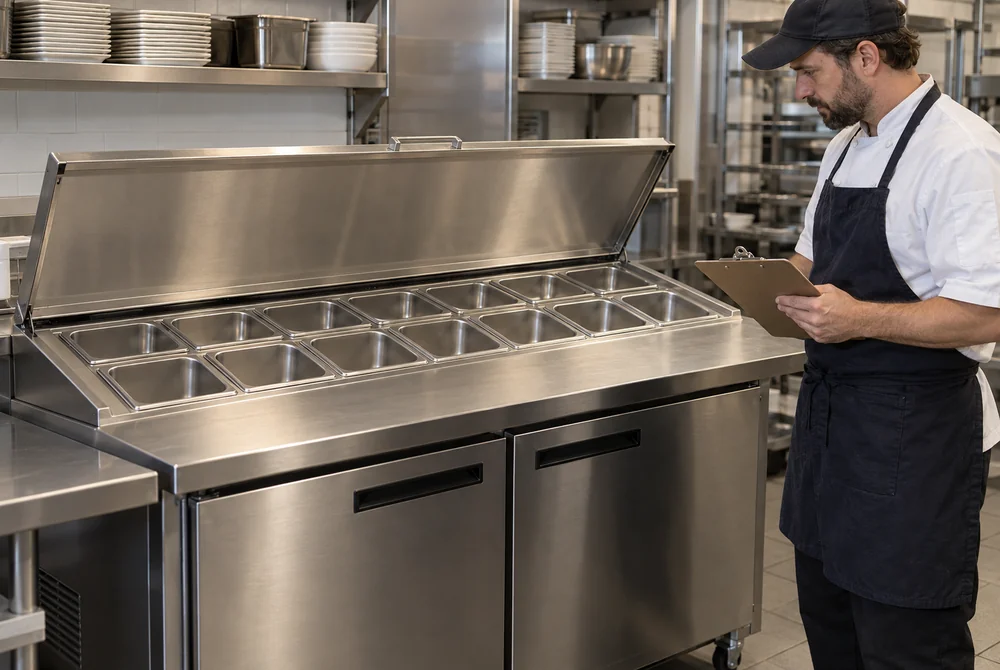
A sandwich or salad station combines a work surface, an accessible ingredient rail, and enclosed refrigerated space. Employees may call all three “the fridge,” but their operating conditions differ. The rail is repeatedly exposed during service. The base has doors or drawers and its own loading arrangement. The counter is a preparation surface. Being part of one cabinet does not make every location suitable for the same task or establish a common product-temperature history.
At closing, describe what will happen in each area. Identify which ingredients are staying, which are moving, which approved destination will receive them, and what equipment configuration remains after transfer. Avoid a single checkbox reading “prep table closed.” It can conceal whether the food was assessed, the rail restored, the base loaded correctly, and the next shift informed. Those are related tasks, but one completed task cannot stand in for the others.
Treat the intended function as the starting point. A cabinet that holds already chilled ingredients is not automatically approved to cool a warm batch, and a rail that works through service has not thereby demonstrated unattended storage under a different cover arrangement. Confirm the installed equipment’s instructions and the site’s operating plan before making the closing routine a permanent habit.
Resolve the actual cover question
Before replacing individual pan lids with a larger overnight cover, establish what the change would alter. It is a labor and setup decision as well as an equipment question. An individual food-container lid, an equipment hood, and an improvised sheet spanning several pans perform different roles. The fact that each can cover the rail does not show that each is a suitable part of this machine’s storage arrangement.
Ask what the proposed change is meant to achieve. Is the concern food protection, drying, odor transfer, cleanup time, or equipment performance? A change that helps one objective may leave another unresolved. Compare the actual approved accessories and pan layout with the proposal. Do not assume that two covers are equivalent because both hide the ingredients from view or can be placed over the same opening.
Keep proposed experiments separate from normal storage. Staff should not leave questionable food overnight merely to discover whether a large cover works. Obtain the equipment guidance and use an appropriate authorized assessment before changing the established arrangement. If the manufacturer cannot confirm an accessory or configuration, preserve that uncertainty rather than treating a good-looking morning display as approval.
Identify the model and its installed arrangement
Record the model and serial number, the rail format, the installed hood or covers, and any obvious configuration differences. Include whether the base uses doors or drawers and whether the machine is a standard or expanded-top version. Locate the manual that applies to that installed family and revision. A photograph from a sales listing can help identify a question, but it is not a substitute for instructions matching the equipment in the kitchen.
Ask whether pans, support bars, internal pieces, or covers have been replaced. A station assembled from convenient spare parts may look complete while differing from the documented arrangement. Record what is actually present without reaching into moving machinery or removing unfamiliar service panels. Where identification needs technical access, ask qualified service personnel to establish it. Managers need a reliable configuration record, not an improvised inspection inside the refrigeration system.
Keep the record useful for purchasing and cleaning staff. A brief photograph and the correct parts reference can prevent the next shift from restoring the wrong pan size or discarding an unfamiliar removable piece. Describe permitted substitutions explicitly. “Use any pan that fits” is too vague when rim fit, depth, support, or air passage is part of the equipment’s intended operation.
Move food without leaving the wrong air path
Beverage-Air’s current SPE installation and operation manual, revision 03/26, states that pans must remain installed for proper circulation and directs replacement with another pan when one is removed. That instruction is a model-family example, not a universal procedure for every preparation table. It demonstrates a concrete closing issue: moving filled pans to another refrigerator and leaving open cutouts can be a different equipment condition from moving the food while maintaining the required pan arrangement.
For equipment with that requirement, arrange the matching clean replacement pans before transfer begins. Put the approved configuration into the closing instruction rather than expecting staff to discover the missing pieces after washing has started. If the necessary parts are unavailable, ask the responsible person how the equipment is to be left under its instructions. Do not improvise an opening cover from a towel, cardboard, or another object not approved for that purpose.
The decision about food location remains separate. Keeping an empty pan installed does not authorize food to stay in it. Conversely, transferring food does not automatically restore the equipment’s circulation. Use separate entries for the food destination and the final rail configuration so staff can complete both tasks without confusing a storage instruction with a refrigeration requirement.
Restore removable pieces after cleaning
True’s current refrigerated food-prep manual, TEC_TM_090 revision G dated April 9, 2026, identifies pans, baffles, and applicable false-bottom pieces as part of correct operation. Its TPP airflow instructions warn against changing baffle position or orientation, while its TSSU section addresses reinstalling removable false bottoms after cleaning. These details show why a visually empty, clean-looking well is not necessarily an operating-ready well. Use only the provisions that apply to the actual model.
Build a simple parts-accountability step into the permitted cleaning routine. Identify the removable pieces, the approved person and method for handling them, and the final arrangement to check. Keep loose components out of ordinary waste or dish racks where they may be mistaken for packaging. If a part is missing, damaged, or cannot be seated correctly, label the condition and obtain the appropriate support before normal use resumes.
Do not turn this into a service tutorial for untrained staff. Electrical isolation, component access, cleaning agents, and reassembly requirements remain equipment-specific. The operator’s useful control is a clear authorized task and a visible unresolved-item process. A cleaner should not have to guess whether an unfamiliar plate is optional simply because yesterday’s colleague left it on a shelf.
| Area | Closing decision | Evidence to identify |
|---|---|---|
| Food load | Stay or approved transfer | Item history and destination |
| Pan rail | Required final configuration | Matching pans and support parts |
| Base cabinet | Actual permitted storage load | Layout and door closure |
| Covers | Approved arrangement | Food lid versus equipment hood |
Check pan fit and quantity against the actual layout
The number of openings is not the complete specification. Compare the supported pan dimensions, depth, divider arrangement, and any loading limits with the documentation. A deeper container may fit through an opening while creating a different product or air arrangement. A pan resting unevenly on a support is not equivalent to one correctly seated. Staff can report these visible differences without adjusting the refrigeration controls to compensate.
Separate spare-part convenience from approved configuration. If a damaged pan needs replacement, identify the correct arrangement before ordering. Keep a small configuration reference where the closing and opening teams can find it. The reference should describe this station, not every unit the business owns. A pizza preparation rail and a sandwich megatop can look similar from a distance while requiring different parts and operating assumptions.
Avoid changing several variables at once. Substituting pans, changing covers, moving shelves, and adjusting the setpoint during one close makes the next observation difficult to interpret. When a change is necessary, define its authorization and record what changed. If performance subsequently becomes uncertain, a reliable sequence helps the service provider investigate the actual configuration rather than a reconstructed memory.
Apply food requirements to the food
The 2026 FDA Food Code is a model offered for adoption by jurisdictions; its publication does not establish which edition or local provisions apply at a particular restaurant. Section 3-501.16 generally specifies cold holding of time/temperature control for safety food at 41°F (5°C) or below, subject to stated exceptions. Use the establishment’s approved procedures and applicable authority to determine the requirements for the actual ingredients and activity.
Separate a food decision from an equipment observation. A controller reading describes a sensor and moment, while a product check concerns a selected item and location. Neither automatically reconstructs an undocumented interval. When the food history is uncertain, follow the site’s escalation and disposition process. Moving an item into a colder cabinet cannot supply the missing history or retroactively make the previous condition acceptable.
Also distinguish cold holding from active cooling and other food processes. Closing time does not convert a warm preparation into a routine holding load. If cooling is required, use the approved method and appropriate equipment under the applicable process. The Food Code cooling provisions address a separate food process; they do not make a prep-table rail an interchangeable rapid-cooling appliance.
Make the base destination real before transferring stock
The enclosed base may be part of the planned overnight arrangement, but it needs enough appropriate space for the actual containers. Check the documented shelf layout, air openings, door closure, and normal access. Do not replace an exposed rail problem with an overloaded base. A container that fits behind the door may still obstruct the permitted layout or make staff hold the door open while rearranging the entire station.
Identify the destination before the rail is emptied. If another refrigerator will receive the food, confirm who has reserved the space and how the contents remain identifiable. Coordinate with the person responsible for food controls, including separation and packaging arrangements. A closing instruction that says “put it in the walk-in” is incomplete if the intended shelf is occupied or the receiving team cannot distinguish today’s transfer from other stock.
Preserve required identification and dates during transfer. Under the Food Code model, applicable ready-to-eat, time/temperature control for safety food has date-marking conditions, and combining ingredients does not simply start a new clock. Apply the actual local procedure. Do not use a fresh container label to conceal the earlier preparation or opening history, and do not interpret “overnight” as a universal shelf-life allowance.
Keep storage loads separate from cooling loads
A quiet kitchen after service can create the impression that the machine has unlimited spare capacity. That is not evidence that it can safely accept a newly prepared warm load. The SPE manual describes the equipment as designed for storage rather than rapid pull-down. Its warning is another reason to establish the load’s condition and intended process before assigning it to a station simply because a compartment is available.
Use the approved food workflow to determine what has already been cooled and what still needs a cooling step. Describe those conditions clearly when assigning storage. Avoid mixing an investigation of the prep table with an improvised production trial. A rail that holds a modest prechilled load successfully has not demonstrated the same result with a deep warm pan or a tightly packed base full of new containers.
If the menu, batch size, or closing preparation changes, reopen the storage plan. The equipment instructions have not automatically expanded with the business. Keep the discussion focused on the actual duty rather than solving every new workload by lowering a setpoint. The appropriate response may involve production scheduling or a different approved storage arrangement rather than refrigeration service.
Decide how the unattended interval will be understood
The closing check and the opening check are two observations, not automatically a continuous record. Decide what monitoring the site’s risk and procedures require and who receives an alert while the kitchen is closed. Keep that decision distinct from the equipment’s ordinary control display. A sensor intended to cycle the refrigeration system may not represent the most relevant ingredient position or reveal every interruption.
Where monitoring is used, identify the channel, location, reporting interval, and response owner. Check that a record can actually be retrieved rather than assuming an icon on a screen proves a complete history. An alarm that reaches an unattended phone has limited operational value. The person receiving it needs the site’s instructions for assessment and escalation, including what they are authorized to do and whom to contact.
Do not invent a universal checking frequency from this article. An approved routine should fit the equipment, ingredients, establishment, and applicable requirements. Record missing data as missing. A tidy graph from one sensor should not be used to fill an unmeasured position or unexplained gap. When the evidence is insufficient for a food decision, preserve the limitation for the responsible person.
Treat lids, hoods and packaging as different controls
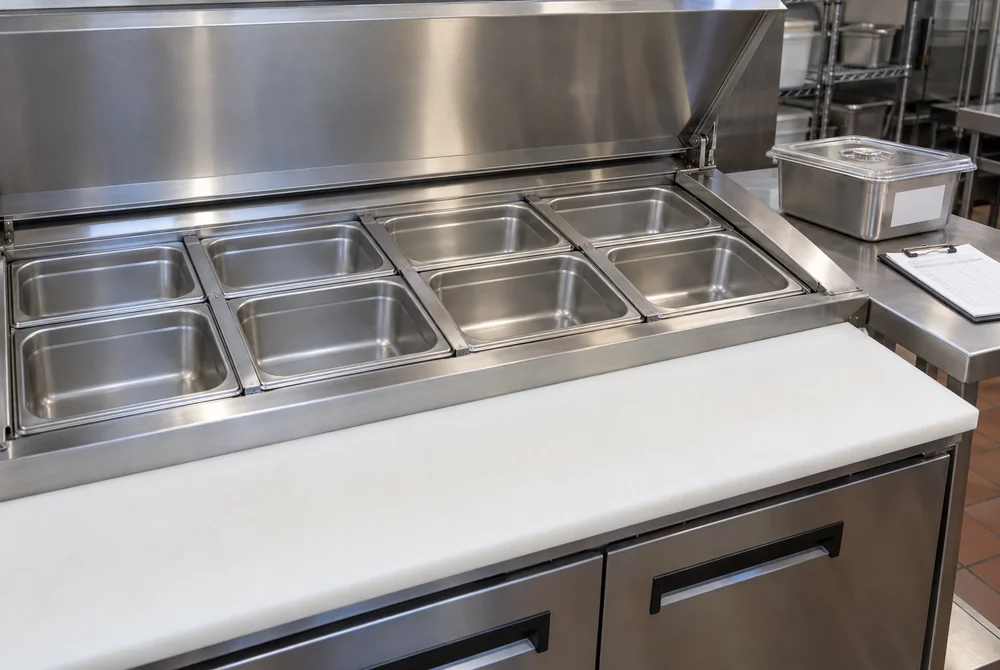
Write the closing instruction using the actual item names. An individual pan lid can protect its contents. An equipment hood belongs to the machine’s intended configuration. Other packaging may have its own food-contact and process requirements. One object should not silently inherit every role because staff call all of them a cover. Obtain support for the complete arrangement, including whether food remains in the rail at all.
Check practical fit without treating it as a performance test. Can the approved hood close as intended? Do handles, containers, or stock prevent closure? Are parts resting securely? Report an obstruction rather than forcing a cover down or modifying it. If a proposed accessory conflicts with the manufacturer’s arrangement, stop and resolve the conflict with the appropriate source before adopting it as the nightly standard.
Keep food quality and safety questions distinct. Drying, freezing, odor transfer, and unacceptable temperature can all cause a poor morning result, but they do not have the same cause or disposition rule. Record the actual condition and follow the appropriate process. A product that looks attractive has not thereby demonstrated a suitable temperature history, and a quality complaint does not identify a refrigerant fault.
Plan cleaning around the actual storage decision
Cleaning should not force staff to improvise where food goes. Establish the approved destination first, then perform the permitted cleaning sequence. Keep food, clean containers, dirty utensils, and chemicals under the site’s hygiene controls. If the machine needs to be taken out of service for authorized work, make that status visible so another employee does not load it while assuming it is simply an empty, available refrigerator.
After cleaning, distinguish “cleaning finished” from “ready to hold product.” The latter also depends on proper reassembly and the operating condition required by the equipment instructions and site process. Do not use a fixed recovery time from another model. Assign the readiness check to an appropriate person and leave any unfinished condition in the handover rather than relying on the next shift to discover it.
The walk-in maintenance guide provides a related example of assigning observation, approved care, and professional work, although it concerns a walk-in cooler. Its task boundaries can help organize responsibility; its equipment-specific instructions must not be transferred to a prep table. This article’s pan and rail questions need the installed prep-table documentation and the actual closing arrangement.
Make the night configuration easy to verify
A short station card can show the required empty-pan layout, permitted covers, destination for transferred stock, and the relevant instructions. Use current photographs of the actual approved arrangement when appropriate. Keep the card concise enough to use during a busy close. Store the detailed manual and supporting decisions elsewhere in the equipment file, with a clear way to find them when an exception arises.
Have an opening employee read the station card during a planned review. Check whether they can identify the required empty pans, the permitted cover, the destination for transferred ingredients and any equipment restriction without relying on a verbal explanation from the closer. If an instruction is ambiguous, correct the actual reference or responsibility rather than adding another vague completion checkbox.
Give substitutions a boundary. If the normal lid or pan is unavailable, identify who decides the alternative and what information they need. Do not make “ask the chef” the entire control if that person will be unreachable. The closing team needs a practical route for unresolved equipment or food questions, while retaining limits on what untrained staff can change.
Review the card when equipment, accessories, menu, or storage arrangements change. A familiar printed instruction can become inaccurate after a replacement top, repaired control, or different pan layout. Mark the current version and withdraw obsolete copies through the site’s normal process. Consistent instructions matter because the station is shared by people working different hours who may never discuss the change directly.
| Check | Record | Owner to name |
|---|---|---|
| Food assignment | Location and unresolved holds | Responsible food manager |
| Rail configuration | Pans,parts,covers as permitted | Closing lead |
| Equipment status | Ready or restricted | Authorized responsible person |
| Unattended interval | Required record or gap | Monitoring contact |
| Opening handoff | Changes and unresolved tasks | Opening lead |
Reopen the station through separate checks
At opening, read the closing note before loading the rail. Confirm the final equipment arrangement, any restrictions, and the identity of transferred stock. If parts were removed for authorized work, verify that the task was closed by the responsible person. Do not assume that an empty rail is ready for food simply because the base display is illuminated and the kitchen is busy.
Set up the permitted load and covers through the established procedure. Keep the food assessment separate from equipment readiness. If a record shows an interruption, an unexplained warm position, or missing history, follow the site’s food process before treating the stock as available. A current cold reading cannot answer every earlier question. Preserve the original observations so the responsible person can make a supported decision.
Then record whether the arrangement matches the approved plan. If the same problem returns, compare the actual pan layout, covers, loading and timing across shifts. That comparison can reveal a workflow inconsistency without declaring that it is the sole cause. It also gives a technician better information if the equipment requires investigation after ordinary operating conditions have been confirmed.
Escalate a configuration problem before ordering refrigerant
If the prep table does not perform under its documented arrangement, provide the technician with model identity, configuration photographs, the observed location, food and air measurements identified separately, and the sequence of changes. Explain whether the issue concerns the rail, base, or both. The site’s reach-in refrigerator guide offers related guidance on repeatable evidence, but an upright refrigerator’s test assumptions should not be substituted for a prep table’s arrangement.
Do not adjust hidden parameters or repeatedly reset the equipment to make the close appear successful. Leave technical access and circuit work with an appropriately qualified provider. Confirm the installed refrigerant from the actual equipment information rather than choosing from a catalog. For example, Beverage-Air identifies R290 on its current SPE72HC-18 product page; that does not establish the refrigerant in another machine or authorize a conversion.
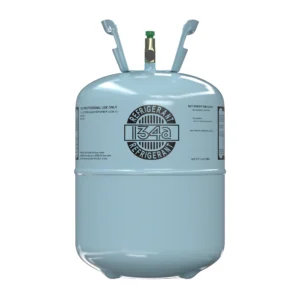
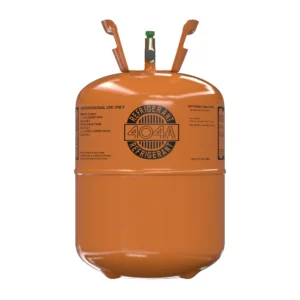
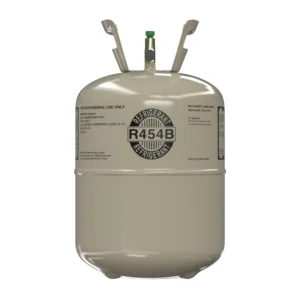
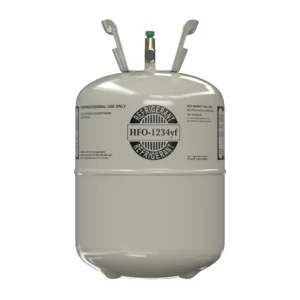
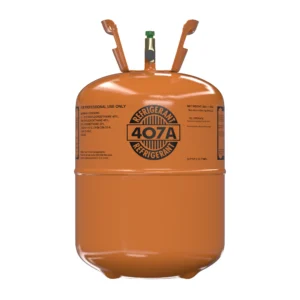
For a separately verified service requirement on an older unit whose installed specification calls for R134a, the site’s R134a product page is a supply reference for qualified professional use. It is not a remedy for missing pans, an unsupported cover, or a poorly planned transfer. A closing problem should lead to the supported operating or service correction, not an automatic cylinder purchase.
Questions closing teams commonly ask
Can we leave the ingredient pans in the rail overnight?
Only make that decision through the actual model’s permitted duty and the establishment’s approved food process, with appropriate evidence about the load. There is no universal permission based on the words refrigerated prep table. If the rail’s suitability is unresolved, arrange the approved storage alternative and resolve the equipment question separately. Do not treat an equipment hood or a cold display as the complete answer.
If we move the food, should we remove every pan?
Follow the installed model’s required configuration. The SPE manual specifically requires pans for circulation and replacement when a pan is removed. Other equipment has its own arrangement. Distinguish transferring food from changing the rail’s air path. Obtain the matching clean parts needed for the permitted close instead of leaving an improvised configuration for the opening shift.
Does the base cabinet prove the top pans are cold enough?
No. The compartments, sensor positions, exposure and loads can differ. Identify what each observation represents and use the applicable method for the actual product and decision. A base reading is useful information about that channel, not a temperature history for every top pan. The same limitation applies in reverse when one sampled pan looks satisfactory.
Can a large cover replace all individual lids?
Do not infer equivalence from size or convenience. Confirm the actual accessory, food-protection arrangement and operating configuration with the appropriate instructions and site procedure. The proposed change may concern quality as well as equipment performance. A workplace discussion can identify the question to ask, but it cannot approve the substitution for a different machine and food process.
Should we turn the prep table off after service?
Follow the manufacturer’s instructions and the approved storage and cleaning plan. If food remains assigned to refrigerated holding, switching off the equipment is not an incidental housekeeping choice. When authorized work takes the unit out of service, establish the approved food destination and readiness process. Do not let a power-off cleaning step become an undocumented overnight operating routine.
What if closing and opening readings are satisfactory but an interval is missing?
Keep the gap visible. Two satisfactory observations do not establish every event between them. Give the available information to the person responsible for the site’s food decision and follow the approved process. Do not backfill a graph, invent an alarm response, or use the current reading to erase the uncertainty. Then address how the required evidence will be obtained next time.
Leave a clear food decision and a correct machine arrangement
The useful close answers two separate questions: where each relevant food load is assigned under the approved process, and how the actual prep table must be left to operate as intended. It also identifies who owns any unresolved condition. Keeping those answers separate prevents a transfer, a cover, or a clean-looking rail from being mistaken for a complete overnight storage decision.
Use the installed instructions, a workable destination, a repeatable configuration and an honest record of what was observed. On the next shift, verify the arrangement before normal loading resumes. That provides a practical closing method for the actual station while preserving the limits of the equipment, the food history and the evidence available to the responsible manager.