A self-cleaning commercial refrigerator condenser may reduce or remove a particular routine cleaning task, but the decision belongs to the installed model’s current instructions and confirmed configuration. It does not automatically remove the rest of the refrigerator from your maintenance contract. Before cancelling a cleaning line, identify the technology, reconcile the applicable documents and ask the supplier to state what work can change and what inspections, exceptions and other duties remain.
The word “self-cleaning” can describe different designs. A fan may reverse, a powered brush may clear a mesh screen, or the condenser geometry may resist blockage. Those mechanisms are not interchangeable. Neither a newer cabinet brochure nor the presence of a familiar brand proves that every refrigerator in an existing fleet has the same feature.
For a kitchen or facilities manager, the useful outcome is an asset-specific maintenance scope. It should explain which task the feature addresses, who confirms its operation, what happens when deposits or faults are found, and how the refrigerator’s remaining upkeep is handled. This guide addresses commercial air-cooled, self-contained cabinets and counters. It is not a cleaning procedure, an electrical modification guide or a blanket warranty interpretation.
Define the task you want to remove
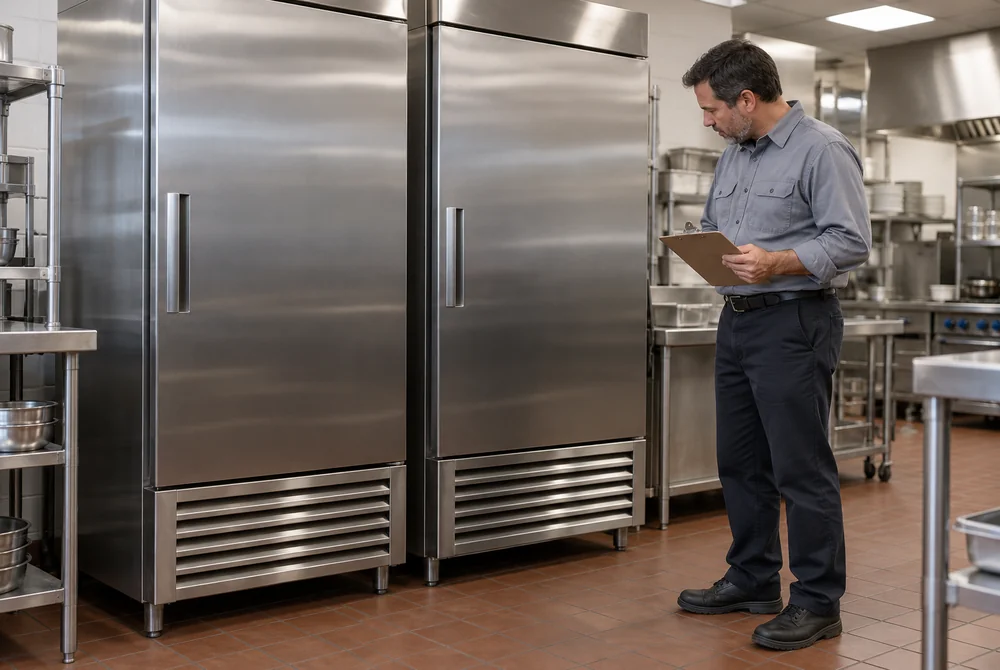
Start with the existing work order or contract, not a slogan. Does the line describe brushing the condenser, checking an intake screen, cleaning the cabinet interior, sanitizing food-contact areas or completing a general refrigeration inspection? A statement that “coil maintenance is included” can hide several activities with different purposes.
Ask the contractor to itemize the work affected by the proposed change. A feature designed to keep dust away from a condenser is not evidence that door seals, drains, internal surfaces or operating controls no longer need attention. Conversely, do not pay for an unnecessary routine task merely because it appears on a standard fleet template. The question is whether the exact task remains appropriate for the exact asset.
Keep maintenance, fault diagnosis and food-related procedures in separate lines. This makes a later quotation easier to interpret. If a cabinet develops an unexplained alarm, the business can authorize diagnosis without assuming that a cancelled cleaning task caused it. If an interior hygiene task is due, staff can see that it remains required regardless of condenser design.
Identify the cabinet as installed today
Record the complete model, serial number, suffix and current condenser arrangement from the equipment file or safely accessible label. Include relevant replacement history. A front badge may remain unchanged after a motor, controller or condensing assembly has been replaced. The maintenance decision must follow the configuration that is actually operating.
Ask the supplier or service provider to confirm whether the feature was included in that serial-specific build. Retain the applicable document and its revision information. If the feature was optional or added later, obtain the installation and service record rather than treating a generic product-family page as proof.
Where identity is uncertain, preserve the existing authorized plan while the uncertainty is resolved. Do not reconstruct an automatic-cleaning mechanism from a grille shape or a salesperson’s recollection. A short request naming the asset and asking for its applicable maintenance requirements is more useful than asking whether the entire brand is maintenance-free.
Recognize three different kinds of technology
The following examples show how manufacturers describe different approaches. They are a guide to document review, not a performance ranking or a claim that one mechanism is suitable for every kitchen. Confirm the offered or installed model before relying on any example.
| Approach | Documented example | Confirm |
|---|---|---|
| Fan reversal | True RCU | Installed motor and controls |
| Brush and screen | Turbo Air device | Device configuration |
| Wide-fin design | Traulsen StayClear | Applicable cabinet variant |
| Anti-blockage geometry | Foster +stayclear | Applicable product generation |
The last column identifies an evidence question, not a staff inspection requiring disassembly. Confirmation may come from serial-specific records or qualified service. Similar marketing names do not establish identical construction: Traulsen StayClear and Foster +stayclear should each be assessed through their own manufacturer’s documents.
Read True’s current claim alongside the older RCU explanation
The True T-49-HC specification carrying a September 2025 edition indicator states that its self-cleaning RCU technology eliminates the need to clean the condenser coil. It also identifies R290 for that specified refrigerator. This is a model-specific current specification, not a statement about every older True cabinet or every task in a service contract.
An older True RCU explanation marked June 2019, hosted by a distributor, describes condenser-fan reversal for twenty seconds at compressor startup and says that the reverse motor does not replace preventive maintenance. Its broader cleaning discussion should not be silently merged with the newer model sheet into a universal rule.
If those documents create uncertainty for your asset, ask True or the authorized provider which instruction applies to its serial number and environment. Obtain the answer before changing the contract. Neither ignoring the newer claim nor cancelling all maintenance from it is a sound way to resolve different document scopes.
A brush-and-screen system has a different service identity
Turbo Air’s current technology explanation describes a fine mesh that catches dust and a rotating brush that moves up and down to clear excess material outward. The page describes this action occurring two or three times a day. That is a manufacturer’s description of its system, not an operating schedule to apply to another brand.
For the maintenance file, ask whether the installed cabinet contains the described device and which operator or service checks apply. A record should identify the device, not simply say “self-cleaning.” If a fault or obstruction is suspected, the provider needs to know which assembly it is assessing.
Do not infer the actual device condition from a clean-looking outer grille alone. Equally, do not assume that every ordinary noise or brief operating change means the device has failed. Describe observations and obtain a model-specific assessment. Staff should not reach into a moving mechanism, force its travel or alter its timing to test a brochure claim.
Anti-blockage construction is not a powered cleaning cycle
Traulsen’s StayClear page describes a wide-finned condenser design that reduces blockage from grease and debris. It identifies the feature as standard on most R/A Series models. The word “most” is a reason to check the actual variant, not permission to mark every cabinet in a mixed fleet with the same maintenance code.
Foster’s +stayclear explanation describes aerofoil tube geometry intended to resist deposits and discusses application-specific versions. Those are design claims with their own scope. An asset with that construction does not necessarily have a motorized cleaning cycle for staff to observe.
Keep the manufacturer’s description separate from the business’s acceptance decision. Ask what routine work can be reduced for the identified design, what condition checks remain and how an abnormal deposit is handled. Do not turn a statement about reduced blockage into an unsupported promise that the complete appliance cannot develop another fault.
Keep the air opening separate from the condenser feature
An automatic or anti-blockage condenser feature does not move a storage carton out of the cabinet’s intake path. When reviewing a contract, retain ordinary operator housekeeping around the installation. Accessible ventilation openings and service access should remain available under the installed instructions.
Record changes in the immediate surroundings: a new storage position, a nearby work station or equipment that now occupies the access route. Staff can report those conditions without measuring refrigerant pressure or removing panels. The service provider can assess whether the installation still meets the model’s requirements.
A useful asset photograph shows the normal operating position and clear route around it. Avoid taking a photograph only after everything has been moved for a service visit and using it to represent the everyday arrangement. The maintenance plan should remain practical during trading, when supplies and people share the same space.
Assess the environment without inventing a universal interval
Describe the actual location and observed deposits. A flour-handling area, laundry-adjacent storage room and busy cooking line present different maintenance questions. That does not justify assigning a numerical cleaning interval from intuition. Use the applicable instructions and provider’s assessment of the actual asset.
If the manufacturer provides a routine interval, retain its conditions and any stated inspection requirement. If it allows a task to be reduced or omitted for a specific technology, record that basis. If the documents do not resolve the installation, ask for clarification instead of choosing whichever online number is cheaper.
The resulting schedule should identify why it applies. A copied quarterly line across every cabinet can conceal differences just as easily as a fleet-wide “no cleaning” instruction. Keep the decision attached to the model and configuration so a replacement cabinet or relocated unit prompts a review rather than inheriting the old code automatically.
Use a contract worksheet that exposes the unanswered items
Before renewing or changing the service agreement, make a short worksheet for each affected asset. Keep detailed manufacturer conditions beside the worksheet rather than compressing long instructions into a crowded table. The template below is an editorial planning aid, not a manufacturer’s service checklist.
| Record | Evidence | Decision |
|---|---|---|
| Asset | Model; serial; location | Correct cabinet identified |
| Feature | Build or service record | Configuration confirmed |
| Routine task | Applicable instructions | Retain; reduce; omit |
| Other upkeep | Operator and service scope | Keep responsibilities clear |
| Exception | Observed condition | Referral and response |
| Documentation | Revision; provider answer | Basis retained |
The routine-task row should name the activity precisely. “Omit condenser brushing under confirmed manufacturer instructions” has a narrower meaning than “no maintenance.” Leave the decision unresolved if the applicable instruction is still missing. A completed worksheet is useful only when it shows the basis and limits of the change.
Compare quotations with the same asset scope
Ask each provider to quote the identified tasks for the same equipment list. Separate routine service, condition inspection, cleaning when required and fault-call response. A lower total can mean a genuine reduction in work, or it can mean that inspections and exception handling have disappeared without discussion.
Clarify whether access preparation, authorized isolation, restoration and operating checks are included when cleaning is actually required. Identify who handles temporary product arrangements and who communicates any operating restriction. These are scope questions; the manager does not need to dictate a technical cleaning method.
If a contractor recommends retaining a conventional cleaning line on an automatic-feature cabinet, ask for the applicable reason. If another provider recommends removing it, ask for its basis too. Compare the answers against the actual manufacturer documentation rather than treating either the largest invoice or the shortest maintenance list as proof of competence.
Do not convert a marketing percentage into your savings estimate
Some manufacturer pages publish maintenance or efficiency claims. They can identify questions worth asking, but they do not establish the financial result of your installation. Do not take a percentage from one design’s demonstration and apply it to every cabinet or the building’s entire electricity bill.
For a contract decision, use the actual task charge, visit arrangement, equipment count and required exceptions. Ask whether removing one task changes the total visit price or whether the provider will still attend for other work. A reduction in nominal cleaning activities may not produce the same reduction in the contract total.
If the business wants to evaluate energy use, establish a suitable measurement scope with the responsible provider. Retain loading, operating hours and relevant conditions so the comparison has meaning. Do not attribute a bill change to the condenser feature when refrigeration load, tariffs or other kitchen equipment changed at the same time.
Review component replacement as a configuration issue
An automatic feature may depend on specific motors, controls or assemblies. When repair work is proposed, ask the provider to identify the supported replacement for the installed model and explain whether the original function will remain. A component that looks similar can still leave an important operating feature unresolved.
This is a procurement and service-approval question, not an invitation for staff to join wires, disable a function or install an improvised substitute. Keep electrical work and internal mechanical assessment with appropriately qualified personnel using the manufacturer’s requirements. Do not use a contradictory public answer as authority to alter equipment.
If an approved configuration change affects the maintenance basis, update the asset record and relevant task scope after the responsible people accept the work. A contract label from before the repair should not continue silently when the feature it described has changed. Retain what was installed and what function was verified.
Separate observation, inspection and cleaning in the service record
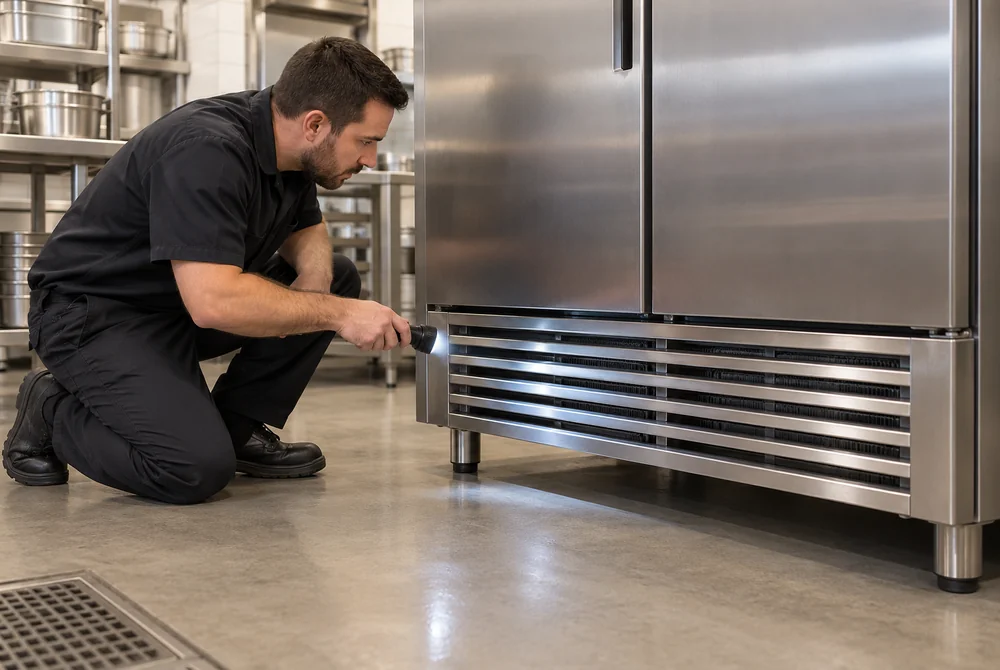
A report that says “condenser done” leaves the business guessing. Ask whether the provider inspected the condition, verified an automatic feature, removed deposits or performed a separate repair. Record the asset and the actual completed scope. Keep any limitation attached to the relevant finding.
Before-and-after photographs can support the visible part of a cleaning record, but they do not independently establish performance or every hidden condition. Ask the provider which check supports its conclusion. If an area could not be accessed under the approved scope, say so rather than allowing a photograph of the grille to imply a complete internal assessment.
Use consistent descriptions from visit to visit. This lets the business identify repeated exceptions without inventing a failure rate from a few observations. A task that is routinely inspected and only occasionally cleaned should be recorded that way, rather than marked as cleaned at every attendance regardless of the work performed.
Plan downtime only for the work being authorized
Find out whether the proposed assessment or cleaning requires the cabinet to be taken out of service, moved or accessed from another side. The answer belongs to the actual procedure and installation. Arrange the operating window with the kitchen and contractor before staff begin transferring stock or moving heavy equipment.
Keep the product plan within the establishment’s approved food-safety process. Suitable temporary storage, identity of affected stock and return arrangements are operational responsibilities that need an owner. A different condenser design does not establish that food can remain in an unsuitable location while work takes place.
If an inspection reveals work outside the agreed scope, ask the provider to state the finding and next step. The business may need a separate authorization or another service window. Avoid treating a scheduled maintenance attendance as open-ended permission to make unrelated equipment changes or alter stored product decisions.
Respond to deposits or faults without forcing a cleaning cycle
If staff see an accessible abnormal condition, record the location, asset and timing and use the established referral process. Include any associated alarm or cooling complaint without declaring the deposit responsible. The contractor should assess the actual condition and the installed feature.
Do not repeatedly switch the refrigerator on and off to try to trigger a reversal, reach through guards to move a brush, or spray an unidentified chemical into the grille. Those actions do not establish a reliable feature test. Follow the installed operator instructions for any permitted action and preserve the observations needed for service.
A visible clean face also does not settle an unrelated temperature complaint. Our reach-in refrigerator repair-or-replace guide addresses measurement context and holding duty. Use that separate investigation when the business question is intermittent warming, while keeping the automatic-feature maintenance decision clearly defined.
Keep interior hygiene and heat rejection as different jobs
A condenser feature concerns part of the machine’s heat-rejection arrangement. It does not document completion of food-zone cleaning or sanitation. Keep the establishment’s hygienic cleaning procedures and applicable equipment instructions visible on the plan, with the correct responsibility assigned.
In a service quotation, identify which surfaces and systems are included. Cabinet interior cleaning, evaporator-related work, drainage assessment and condenser care should not all be represented by one ambiguous tick box. Some tasks may belong to trained staff within approved operator scope; others may require technical service.
The broader commercial refrigeration maintenance guide can help organize responsibilities. It is not a substitute for the installed cabinet’s instructions. This article narrows one particular decision: how a confirmed condenser feature changes a named task without erasing the rest of the operating plan.
A mixed fleet needs more than one maintenance code
Consider a fictional restaurant with an older conventional cabinet, a newer confirmed RCU refrigerator and an unrelated wide-fin-design cabinet. No customer result, price or performance is claimed in this example. The owner wants one contractor attendance, but that does not require one identical task list for all three assets.
The provider can retain the applicable conventional task for the older unit, clarify the newer model’s routine-cleaning instruction and document the inspection basis for the third design. Shared attendance may still cover other relevant maintenance. Each asset’s scope should remain readable inside the combined agreement.
If one cabinet is replaced later, review that line instead of applying the previous unit’s code to its successor. If a cabinet moves closer to another production area, ask whether the changed conditions affect its plan. This small administrative step is more useful than assuming the original fleet decision will remain suitable indefinitely.
Ask what the warranty documents actually require
Do not infer warranty coverage from a marketing paragraph alone. Obtain the applicable warranty and maintenance conditions for the model, region and purchase. Ask the supplier to explain the evidence expected when a claim involves deposits, component replacement or an automatic device.
If a provider says a specific task must continue to preserve coverage, request the relevant instruction or manufacturer clarification. If a supplier says routine condenser cleaning can be omitted, retain the scope of that statement. Both answers should be connected to the actual asset rather than left as an oral assurance remembered by one employee.
This article does not decide a disputed warranty claim. Its recommendation is to keep the governing documents, maintenance history and service findings together. Clear records make it easier for the responsible parties to assess what occurred without pretending that every exclusion or regional term is the same.
Refrigerant supply is a separate decision
Routine external condenser maintenance does not itself establish a need for refrigerant. Ask a provider proposing sealed-circuit work to identify the diagnosed condition, exact equipment specification and scope. Keep that proposal separate from a maintenance-contract change so material procurement has a defensible basis.
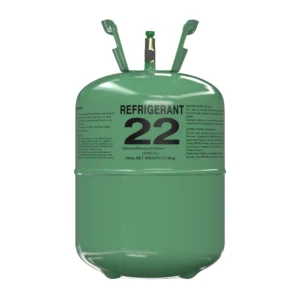
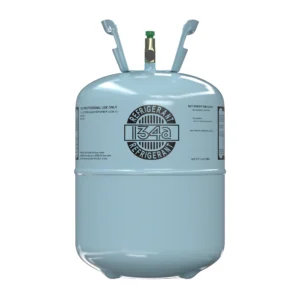
The current True T-49-HC example identifies R290; it is not an R134a application. For a separately confirmed legacy installation that specifies R134a and needs diagnosed professional service, the site’s R134a product listing is a supply reference. It does not identify the refrigerant in an unknown cabinet, supply a cleaning material or authorize substitution in the R290 example.
Arrange purchasing and service under the applicable requirements. EPA’s refrigerant sales restriction guidance, updated March 23, 2026, describes relevant eligibility and exceptions. A self-cleaning claim changes neither the installed refrigerant identity nor the basis needed for a professional refrigerant-service order.
Make the revised agreement usable after staff turnover
When the maintenance decision is accepted, update the task list with the asset identity, document basis, responsible role and exception route. Keep a clear distinction between tasks removed, tasks changed and tasks unchanged. The next manager should not need to reconstruct the decision from a brochure and an old invoice.
Tell kitchen staff what they are expected to observe from normal access and whom to contact if the condition changes. Tell the contractor what inspection and reporting remain in scope. A shorter contract should still explain how an unexpected condition reaches someone who can assess it.
Retain the former scope and change date in the equipment history. This helps interpret later service records without suggesting that the old task was always unnecessary or that a later fault proves the change was wrong. Evaluate a new problem on its actual evidence, then review the maintenance decision if that evidence affects its basis.
Verify the first visit under the changed scope
Use the next appropriate attendance to confirm that the revised asset list and task descriptions are practical. Ask the provider whether each automatic or anti-blockage feature was identifiable from the retained records and whether any unanswered installation question remains. Record exceptions without expanding them into a claim about the whole fleet.
Check the invoice against the agreed scope. If a removed routine task is still billed, ask why. If an inspection or restoration check was expected but absent, resolve that gap. The purpose is to verify the contract’s implementation, not to create a new technical testing procedure for staff.
Review whether the operator referral process worked between visits. A maintenance plan can be technically appropriate yet fail because no one knows who responds to a concern. Keep one accessible instruction linking the asset, normal operator scope and service contact through the establishment’s existing system.
Frequently asked questions
Does self-cleaning mean the refrigerator needs no maintenance?
No. Determine which named condenser task the installed feature changes. Other equipment and hygiene duties have their own basis. A current model statement may support omitting routine coil cleaning, but it should not be stretched into cancellation of every inspection or service responsibility.
Should every automatic-feature cabinet still be cleaned monthly?
Do not impose a universal interval. Confirm the current serial-specific instructions and installation conditions. Where documents differ, request manufacturer clarification before changing the plan. A schedule borrowed from another model can be just as misleading as an unsupported “never clean” instruction.
Are True RCU, Turbo Air’s brush system and StayClear the same?
No. The cited manufacturer descriptions identify different mechanisms and applicability. Similar names or purposes do not establish identical components, schedules or maintenance requirements. Record the installed design and use its own documentation.
Can staff cycle the power to prove the automatic feature works?
Do not create an improvised test. Preserve the observed condition and follow the installed operator procedure. Internal feature verification belongs in the appropriate authorized service scope. Repeated switching can complicate an operating complaint without providing the evidence you need.
Can an ordinary replacement fan preserve a reversing feature?
That requires a manufacturer-supported component and configuration assessment. Ask the qualified provider to identify the correct replacement and verified function. Do not alter wiring or disable controls from an online answer. Retain any approved configuration change with the asset history.
Does a dirty grille prove a refrigerant problem?
No. Describe the accessible condition and arrange the relevant assessment. Grille condition, condenser function and refrigerant condition are different questions. Procurement follows a diagnosed requirement and verified equipment identity rather than appearance alone.
What should justify removing a contract line?
An identified asset, confirmed feature, applicable document or manufacturer clarification, a precisely named task and a clear remaining exception process. Keep that basis with the revised agreement so the decision survives staff changes and later repairs.
Source and scope notes
Manufacturer material was checked October 13, 2026. The True sheet carries September 2025 identification; the older True RCU explanation is marked June 2019 and is hosted by a distributor. Turbo Air, Traulsen and Foster technology pages were current retrieved pages without a precise revision date established here. Examples explain scope differences rather than rank products or promise savings. The worksheet and mixed-fleet example are editorial planning tools. Obtain the current instructions applicable to the actual serial number, region and installed configuration before revising work.