
Low refrigerant generally does not directly damage an expansion valve. Instead, it deprives the valve of the solid column of liquid refrigerant it needs to feed the evaporator correctly. The resulting low suction pressure, high superheat, poor cooling, and possible frosting can closely resemble a restricted or failing thermostatic expansion valve.
That distinction matters because replacing the expansion valve will not correct a leak or an undercharged system. In many cases, the expansion valve is responding normally to abnormal conditions elsewhere in the refrigeration circuit.
According to the Danfoss TXV troubleshooting guide, thermostatic expansion valves are frequently misdiagnosed in poorly performing air-conditioning and heat-pump systems. Airflow, refrigerant charge, liquid-line restrictions, sensing-bulb installation, and valve sizing should all be checked before the valve is condemned.
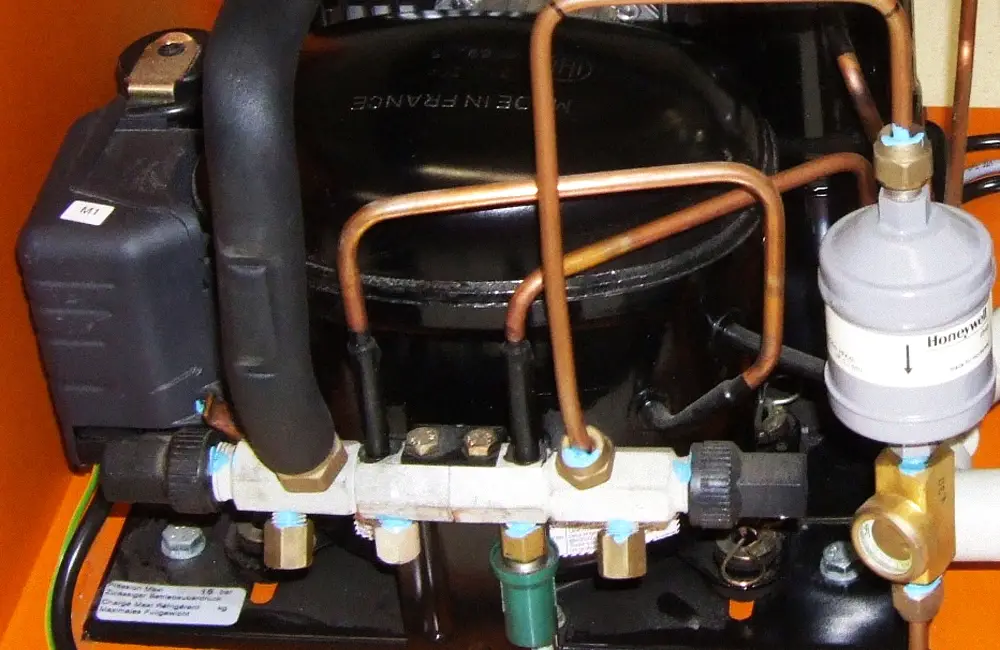
What an Expansion Valve Actually Does
A thermostatic expansion valve, commonly called a TXV or TEV, meters refrigerant into the evaporator. It responds primarily to evaporator outlet superheat—the temperature of the refrigerant vapor above its saturation temperature at the measured suction pressure.
The valve attempts to maintain sufficient superheat so refrigerant can absorb heat throughout the evaporator without allowing unevaporated liquid to return to the compressor.
For the valve to work correctly, it normally needs:
- An adequate supply of liquid refrigerant at its inlet
- Sufficient pressure difference across the valve
- A correctly installed and insulated sensing bulb
- An unobstructed external equalizer when one is used
- Proper evaporator airflow
- A clean liquid line and filter-drier
- The correct valve and power element for the application
Low charge changes the conditions presented to the valve. It does not necessarily harm the valve’s diaphragm, needle, seat, or sensing element.
What Low Refrigerant Does at the Valve
When refrigerant inventory falls, the condenser may not maintain a full liquid supply to the expansion valve. Vapor bubbles or flash gas can then develop in the liquid line.
An expansion valve is sized with the expectation that liquid will reach its inlet. Vapor occupies substantially more volume than liquid, so a mixture of liquid and flash gas cannot deliver refrigerant through the valve in the same way as a solid liquid column.
The evaporator becomes starved. Less of its surface contains actively boiling refrigerant, which reduces cooling capacity. Suction pressure commonly falls while evaporator outlet superheat rises.
Danfoss explains that a low refrigerant charge normally produces higher superheat, lower subcooling, and lower evaporator pressure. Those readings describe an underfed evaporator, but they do not prove that the expansion valve itself is damaged.
The TXV may open farther in an attempt to feed more refrigerant. If its inlet is receiving mostly flash gas or an inadequate amount of liquid, opening farther cannot make up for the missing refrigerant inventory.
Low Refrigerant and a Restricted TXV Can Look Similar
A low charge and an underfeeding expansion valve can both create a starved evaporator. Technicians therefore need more than suction pressure or superheat to separate them.| Observation | Low refrigerant charge | Restricted or underfeeding TXV |
|---|---|---|
| Evaporator superheat | Usually high because the evaporator is starved | Can also be high because flow is restricted |
| Condenser subcooling | Commonly low | May be normal or elevated when liquid backs up before a restriction |
| Suction pressure | Often low | Often low |
| Liquid-line bubbles | Possible when liquid supply is insufficient | Possible downstream of a filter-drier or line restriction |
| Temperature drop before the TXV | No concentrated drop required | A localized drop may identify an upstream restriction |
| Result after leak repair and correct charging | Operation should move toward normal | Underfeeding may continue if the valve or liquid line is faulty |
Source note: Diagnostic patterns are based on the Danfoss TXV troubleshooting guide and Parker Sporlan Bulletin 10-11. Actual readings depend on equipment design, load, airflow, refrigerant, and manufacturer procedures.
What Can Actually Damage or Disable an Expansion Valve?
Low refrigerant by itself is not a common mechanism for physically damaging a TXV. The following conditions are more credible causes.
Moisture Freezing Inside the Valve
Moisture can freeze at the valve’s small port because the expansion point is one of the coldest locations in the system. Ice may hold the valve closed, partially open, or fully open.
The symptom may appear and disappear as the ice melts and refreezes. That intermittent behavior can be mistaken for incorrect charge.
Dirt, Metal Particles, or Oil Breakdown Material
Foreign material can lodge between the valve needle and seat. Depending on its location, contamination may prevent the valve from opening or closing correctly.
Parker Sporlan identifies moisture and foreign material—including metal chips, copper oxide scale, and oil-breakdown residue—as causes of expansion-valve malfunction. Its TXV service bulletin recommends correcting contamination and providing appropriate liquid-line filtration rather than assuming refrigerant quantity is the only issue.
Heat Damage During Installation
Excessive brazing heat can damage the valve’s internal parts or thermostatic element. Discoloration around the valve body may support this diagnosis, although appearance alone is not conclusive.
Sensing-Bulb or Capillary-Tube Damage
A loose, poorly positioned, uninsulated, dented, or overheated sensing bulb can make the valve respond incorrectly. A damaged capillary tube or lost thermostatic-element charge can also keep the valve from opening as intended.
Mechanical Wear or an Incorrect Valve
A worn needle and seat may leak during the off cycle. An undersized valve, incorrect power element, blocked equalizer, or improperly adjusted valve can also create symptoms that look like refrigerant starvation.
A Leak Can Indirectly Lead to Valve Trouble
A refrigerant leak does not automatically pull dirt or moisture into an operating system. When system pressure remains above atmospheric pressure, refrigerant generally moves outward through the leak.
However, contamination can enter if the system is opened improperly, operates in a vacuum on part of the low side, or receives poor service without adequate evacuation and dehydration. A burnout or degraded oil can also circulate debris internally.
Therefore, the relationship is usually indirect:
- The system loses refrigerant.
- Cooling performance declines.
- Improper service or extended abnormal operation allows contamination.
- Moisture or debris restricts the valve.
- The original low-charge problem is now accompanied by a genuine valve problem.
A system can also lose charge without displaying an obvious puddle or visible opening. The article Can an Air Conditioner Lose Refrigerant Without a Visible Leak? explains why small leaks can remain difficult to see.
The Compressor Is Usually at Greater Risk
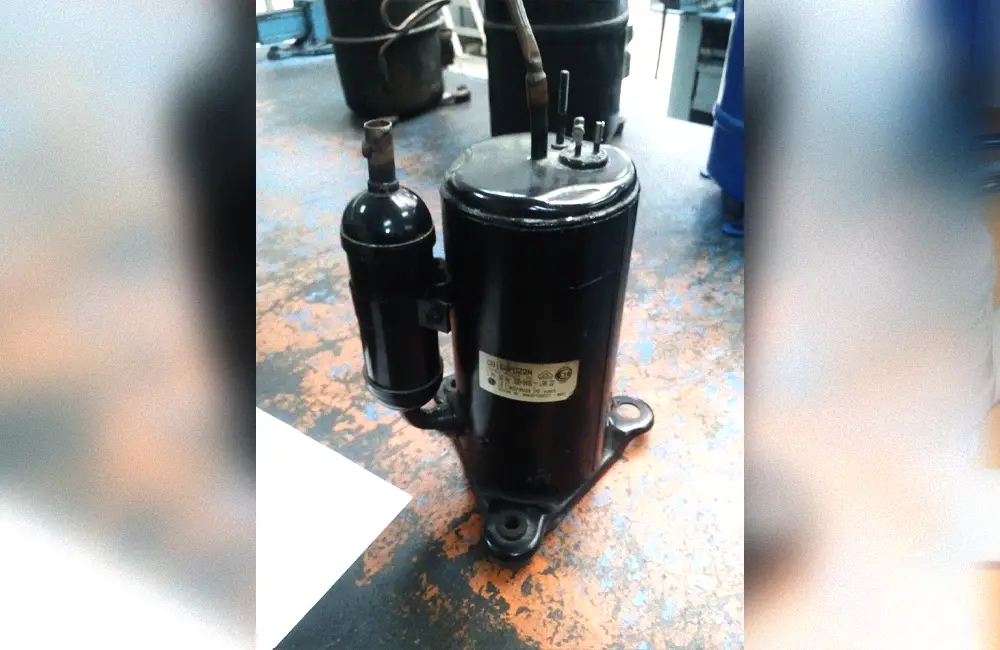
Although low refrigerant rarely damages the expansion valve directly, it can be harmful to the compressor.
A starved evaporator can produce high suction superheat and an elevated compression ratio. Reduced refrigerant mass flow may also provide less cooling to compressors that depend on returning suction gas for motor cooling.
The Danfoss compressor failure guide lists low suction pressure, high suction superheat, and reduced refrigerant-gas return caused by undercharge or leakage among potential contributors to high discharge temperature. Excessive heat can reduce lubricant viscosity and damage bearings, windings, valves, or scroll components.
That is why the better question is often not “Will low refrigerant ruin the TXV?” but “How long can the compressor tolerate this operating condition?” Our guide to running an AC with low refrigerant covers that risk in more detail.
How a Technician Separates Low Charge From Valve Failure
A dependable diagnosis should be systematic. The Department of Energy’s air-conditioner diagnostic guideline warns that interacting faults and environmental conditions can lead to an incorrect refrigerant-charge diagnosis.
A qualified technician may:
- Confirm the equipment’s refrigerant and charging procedure.
- Check the air filter, blower operation, coil condition, and airflow.
- Measure suction and discharge pressures under stable conditions.
- Calculate superheat and subcooling using accurate line temperatures.
- Check for a temperature drop across the liquid-line filter-drier.
- Inspect the TXV bulb, insulation, capillary tube, and equalizer.
- Check for flash gas at the valve inlet.
- Locate and repair leaks before restoring the charge.
- Reevaluate valve operation after the correct charge is established.
Static pressure with the system off cannot reveal how much refrigerant is present. Temperature changes and pressure equalization affect those readings, as explained in Why Refrigerant Pressure Rises After an AC Shuts Off.
What Should a Homeowner Do?
Homeowners can safely check whether the filter is dirty, whether supply airflow has weakened, whether the outdoor unit is obstructed, and whether the system repeatedly shuts down.
Do not adjust the expansion valve, press a service valve, or add refrigerant based on frosting or a single pressure reading. Adding refrigerant to a restricted system can create an overcharge while leaving the original fault unresolved.
For stationary air-conditioning equipment in the United States, the EPA Section 608 certification rules identify attaching or detaching gauges and adding or removing refrigerant as technician activities requiring appropriate certification. EPA regulations also prohibit intentional venting of regulated refrigerants during service, subject to limited regulatory exceptions.
Turn the system off and request service if it provides little cooling, runs continuously, repeatedly trips a protective control, or produces abnormal compressor noise or odor.
Repair the Cause Before Recharging
If the system is genuinely low, the technician should identify the leak, determine whether repair is practical, evacuate the circuit when required, and charge it using the equipment manufacturer’s procedure.
Replacing the expansion valve before correcting the refrigerant shortage can waste time and money. Conversely, repeatedly adding refrigerant will not solve a restricted, contaminated, or mechanically damaged valve.
After the system refrigerant has been positively identified, qualified buyers can consult Refrigerant Centers’ air-conditioning and heat-pump refrigerant collection or complete refrigerant catalog. These pages are supply resources, not compatibility guides; refrigerant must match the equipment label and manufacturer documentation.
Frequently Asked Questions
Can low refrigerant make an expansion valve stick?
Low charge does not normally make the valve’s mechanical parts stick. Moisture, ice, debris, oil residue, physical damage, or a failed power element are more likely causes. Low charge can nevertheless make a normally operating valve appear unable to feed enough refrigerant.
Can low refrigerant cause ice around the TXV?
It can contribute to localized frost because of low evaporating pressure and refrigerant flashing. Frost does not prove the valve is damaged. Ice that repeatedly forms inside the valve port may instead indicate moisture contamination.
Is high superheat proof of a bad expansion valve?
No. High superheat can result from low charge, a liquid-line restriction, inadequate pressure difference, an undersized valve, an improperly mounted sensing bulb, or a restricted TXV. Subcooling, airflow, temperatures, and component checks are also necessary.
Will adding refrigerant fix a starved evaporator?
Only if insufficient charge is the actual cause and the system is otherwise sound. The leak should be found and addressed before the correct charge is restored. Adding refrigerant will not clear a blocked filter-drier or repair a failed expansion valve.
Can a bad expansion valve look like low refrigerant?
Yes. Both conditions may cause low suction pressure, high superheat, reduced capacity, and evaporator frosting. Subcooling and temperature measurements across possible restrictions help distinguish them.
Can low refrigerant damage an electronic expansion valve?
Low system charge generally does not directly damage an electronic valve’s motor or needle. It may cause the controller to command a large valve opening while the evaporator remains starved. Wiring, sensors, controller output, charge, and liquid conditions should be checked before replacing the valve.
Should an expansion valve be replaced after a refrigerant leak?
Not automatically. Replace it only if testing identifies physical damage, contamination that cannot be corrected, a failed power element, unacceptable seat leakage, or continued improper operation after charge and other system conditions have been corrected.
Conclusion
Low refrigerant usually affects what an expansion valve receives, not the physical condition of the valve itself. It can create flash gas, high superheat, low evaporator pressure, and weak cooling that closely resemble an underfeeding TXV.
A system-wide diagnosis is essential. Correct the leak and refrigerant charge, verify airflow and liquid-line condition, and then judge the valve. Until those steps are complete, replacing the expansion valve is an assumption—not a repair.











