
The correct refrigerant for a vending machine is the one specified for its verified refrigeration assembly and approved configuration. There is no universal “vending machine Freon.” Before authorizing a recharge, buying a cylinder or ordering a replacement cooling deck, identify the cabinet, the installed refrigeration unit, the refrigerant designation and the applicable manufacturer documentation. If those records disagree, resolve the disagreement with a qualified provider before material is introduced.
This guide helps vending-route owners, facilities teams and purchasing staff turn “what Freon does this machine take?” into a usable service specification. It concentrates on refrigerated beverage and snack vending equipment in the United States, including older machines with replacement decks. It is not a charging tutorial. Frozen-food machines, food-safety controls and equipment sold in other markets need their own application-specific review.
Why the cabinet brand is only the beginning
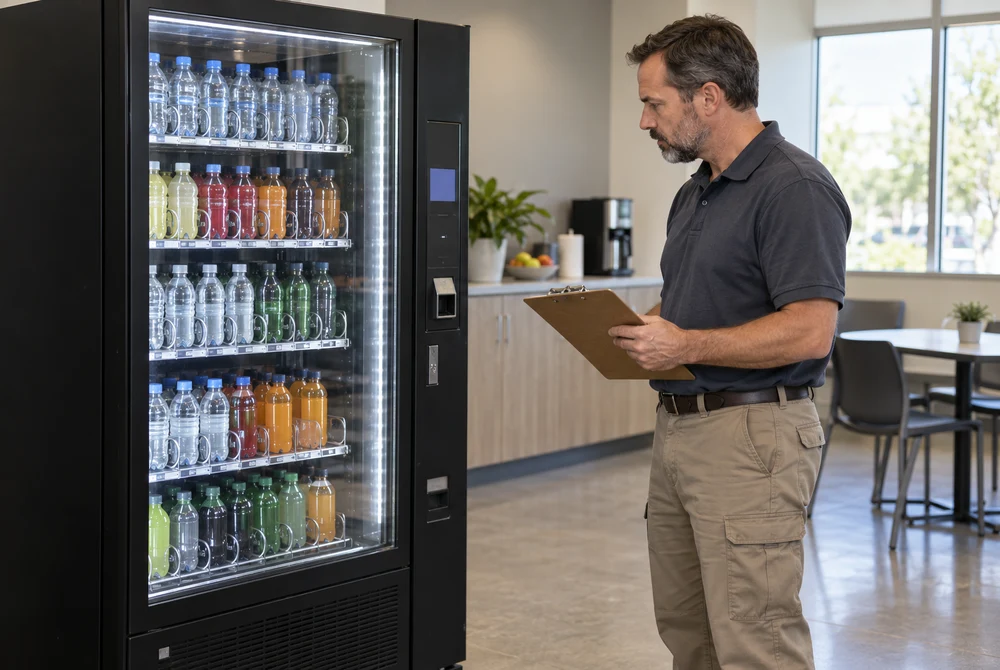
A vending cabinet can remain on a route through several ownership changes and repairs. Its outer branding, payment system and product columns may stay familiar while its cooling assembly changes. An old purchase listing might describe the original machine correctly without identifying the deck presently installed. A route spreadsheet that records only “large soda vendor” cannot support a refrigerant purchase or a dependable spare-parts order.
Give the cabinet and refrigeration assembly separate identities in the asset file. The cabinet record establishes where the unit works and which products it serves. The cooling-assembly record establishes the installed part, identifying labels and service history. Connect the records explicitly: assembly B belongs to cabinet A at location C as of a particular date. This also prevents a removed deck’s label from becoming the assumed specification for the deck that replaced it.
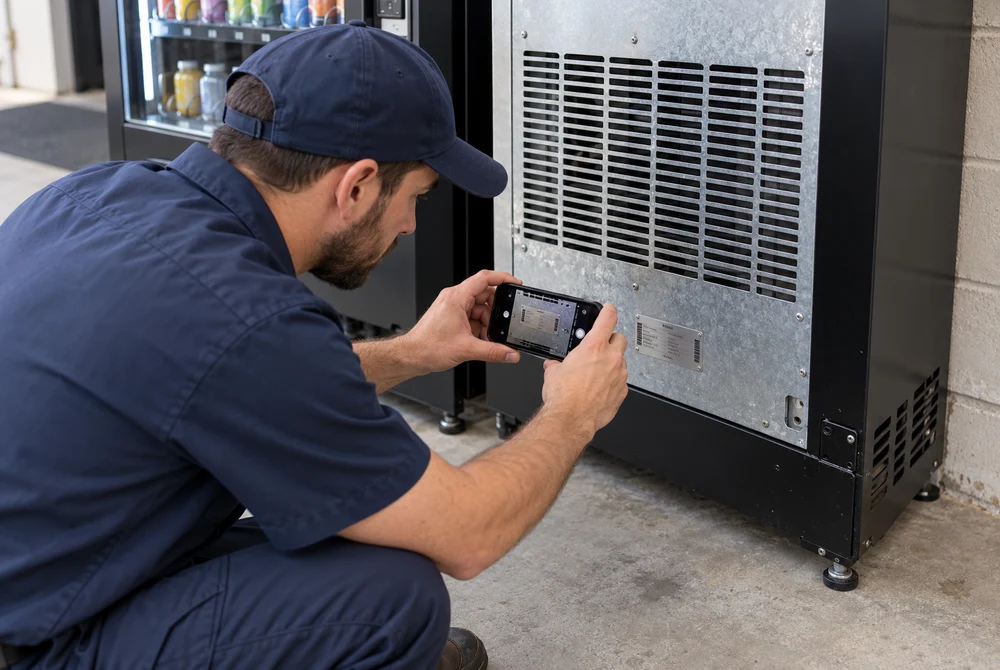
Record the full model and serial number as printed, including suffixes. Photograph safely accessible labels without moving heavy equipment or removing electrical covers simply to obtain a clearer picture. If a relevant plate is inaccessible, send that limitation to the service provider. Do not let an incomplete record quietly become a complete specification because purchasing needs a quick answer.
Use manufacturer examples without turning them into a fleet rule
Royal Vendors’ GIII manual listing dated January 14, 2014 specifies 115 VAC, 60 Hz models 804, 660 and 550 with serial numbers beginning 201134 and lower. Its separate manuals index includes other versions. That specificity matters: a document carrying the right family name may still cover the wrong electrical version or production range.
At the other end of the equipment history, SandenVendo’s G-Drink HC manufacturer page identifies a hydrocarbon design using R290. It demonstrates that a current refrigerated vendor cannot be assumed to use the material remembered from an older route. It does not authorize applying that refrigerant to an older machine.
Use these examples to improve the question you send to support: which document, revision and assembly designation apply to this installed unit? Avoid selecting a charge from a model-family search result alone. Keep the source document with the asset so the next service visit can check the same basis rather than repeating a web search with a slightly different machine description.
A practical identification record
| Record field | What to retain | What it supports |
|---|---|---|
| Cabinet identity | Full model and serial | Correct equipment family |
| Installed deck | Assembly label and part number | Current configuration |
| Refrigerant marking | Exact designation; legible photo | Material identification |
| Service history | Replacement and conversion records | Explains changed labels |
| Approval source | Applicable manual or support reply | Verified service specification |
These fields organize the evidence; no single row automatically settles every question. A replacement invoice without an assembly number may be insufficient. A readable refrigerant marking can still conflict with undocumented changes. Add a note describing each conflict and the person responsible for resolving it. Keep the photographed original alongside the typed transcription so a missing letter or unit can be checked later.
Separate refrigerant identity from refrigerant condition
Knowing the approved refrigerant does not establish what is inside a previously serviced circuit. A seller’s statement that a machine “was topped up last year” is a history item, not proof of correct contents. Ask for the invoice, material designation and work scope. Where the record is missing or contradictory, have the provider determine an appropriate assessment rather than assuming that the latest written label describes an undocumented intervention.
Also distinguish identity from quantity. The machine’s documented charge belongs to the refrigeration system, while a supplier’s cylinder weight describes the package being sold. A large cylinder is not a recommended amount for one small vending deck. Purchasing should receive the technician’s requested material and justified supply quantity, with responsibility for transport, storage and unused material established. Staff should not calculate a service charge by dividing a cylinder among machines.
A warm drink, a running compressor or a pressure reading cannot identify the refrigerant. If someone suggests “add a little and see,” return the request to the diagnostic stage. The same-site discussion of charging by pressure alone explains the measurement limitation. A confirmed refrigerant specification and a confirmed need for circuit work are two separate approvals.
Do not substitute a convenient automotive kit
An automotive product’s marketing name is not a vending-service specification. Check exactly what the container contains, including any stated oil, sealant, dye or other additions, and have the service provider confirm suitability for the approved work. Do not assume that a familiar refrigerant number makes every packaged product interchangeable. A hose or gauge supplied with a consumer kit does not establish the correct service method.
EPA’s refrigerant sales restriction guidance, checked October 9, 2026, distinguishes stationary-equipment purchase eligibility from motor-vehicle servicing and describes a limited small-can exception for substitute refrigerants intended for motor-vehicle air conditioners. That exception is not a general authorization to service stationary vending refrigeration. Confirm the applicable buyer documentation with the supplier and use appropriately qualified personnel.
For an existing assembly whose R134a service requirement has been verified, the Refrigerant Centers R134a product page is a same-site supply reference. Review the actual product documentation and package with the provider. This conditional link does not establish that the machine needs refrigerant, that the cylinder quantity is appropriate for the route, or that R134a belongs in a machine identified for another material.
What R290 means for dispatch and procurement
R290 is propane refrigerant with flammability considerations. The equipment’s design, labeling and applicable conditions matter, so tell the service company what the label says when booking the visit. Ask it to confirm capability for that equipment rather than discovering the requirement after a general repair contractor arrives. Do not connect an automotive kit, use fuel propane, or experiment with substitute material.
EPA’s current SNAP vending-machine substitutes page lists R290 for new equipment with use conditions and explains that determinations apply to a particular end use. An acceptable listing is not manufacturer approval for an improvised retrofit. Have the provider verify the actual application and governing conditions; this guide does not supply a charge-limit shortcut or conversion recipe.
A purchase request for a replacement R290 machine should include the exact equipment configuration, installation requirements, service capability and manufacturer documents. Keep that project separate from procuring service refrigerant for an existing HFC deck. The distinction allows a business to plan supported equipment replacement without treating a refrigerant’s environmental description as a sufficient engineering specification.
How to handle a manufacturer-approved deck conversion
Sometimes the manufacturer provides a specific assembly-conversion path. Royal Vendors’ Service Bulletin 412, revision 01, dated December 22, 2017, describes a conversion from an original R744 refrigeration system to an R134a system for covered GIII vendors. It is a model-specific manufacturer document, not permission to put R134a into a CO2 circuit.
If a vendor proposes a conversion, request the applicable bulletin or written support basis and a complete assembly-level quotation. Confirm what equipment is replaced, which associated components or controls are included, and how the changed configuration will be identified. Ask support whether the historical bulletin still applies to the supplied kit and installed serial range. An old document can be relevant without establishing current parts availability.
Preserve the conversion invoice and resulting identification in the equipment file. Mark the old assembly record as removed rather than deleting its history. A future technician should be able to distinguish the original design, the authorized change and the presently installed unit. If the proposal relies only on “we do this all the time,” obtain the missing manufacturer basis before approving it as a supported conversion.
Choose the scope before asking for a price
There are several different purchases hiding inside “fix the refrigeration”: a diagnostic visit, a repair to the existing sealed assembly, a supported replacement deck, or an entire replacement machine. Request separate descriptions when more than one is proposed. Otherwise, a low price for a temporary intervention can be compared unfairly with a quotation that includes a replacement assembly, transport, commissioning and warranty.
For existing-assembly repair, ask what finding supports the work, which cause is being corrected and what follow-up will establish the result. For deck replacement, ask for the exact assembly number and compatibility confirmation. For a complete machine, ask about its product duty, location, utilities and servicing. A general statement that the replacement is “the same size” leaves important compatibility questions unanswered.
Keep the commercial approval specific. Authorizing diagnosis should not automatically authorize an unknown conversion or the introduction of a different refrigerant. State who can approve additional work and how the provider should report a changed finding. This helps a route manager avoid an unexpected equipment configuration and helps the contractor obtain a clear decision when assessment reveals something different from the initial complaint.
A replacement deck must fit more than the opening
A cooling deck that slides into the cabinet is not necessarily the correct replacement. Request confirmation of the complete assembly match for the cabinet model, serial range and electrical version. The quotation should explain any associated installation parts and approved interfaces. Purchasing staff need the manufacturer’s supported identification rather than a visual comparison between two photographs.
Ask whether the proposed assembly is new, remanufactured or used, and obtain the actual warranty terms. A used deck needs a record of its identity and supplied condition. Do not accept an unidentified spare simply because it was previously cold in another cabinet. Keep responsibility for preparation, installation and performance verification clear, especially where the supplier and installing contractor are different businesses.
If the route keeps spare assemblies, label their storage records so staff can locate the right one without assuming all vendors share a deck. Include compatibility evidence, service history and any restrictions on installation. Avoid creating a fleet-wide interchangeability rule from one successful swap. Spare inventory should make the approved response faster while preserving the equipment-specific check.
Build a quotation that purchasing can compare
| Proposal item | Required detail |
|---|---|
| Diagnosis | Finding and limits of assessment |
| Material or assembly | Exact designation and approval basis |
| Site work | Access, removal, installation, transport |
| Commissioning | Supported operating and vending checks |
| Commercial terms | Lead time, coverage, exclusions, follow-up |
Put explanations and safety conditions in the attached scope rather than squeezing them into a narrow quotation table. Ask both bidders to identify exclusions, such as transport to a workshop or unrelated payment-system repairs. Compare total supported scope and downtime arrangements using actual written figures. There is no universal repair-price threshold or guaranteed payback period that can replace those business inputs.
Work through an unresolved deck purchase
Consider a fictional route with two cabinets, North and South, and one spare deck in the workshop. North’s cabinet plate is legible, but its current deck was changed before the route changed ownership. South has a complete installation invoice. The spare carries a readable assembly number, although a handwritten note says only “from North.” These details are invented to illustrate record review, not a customer account or a compatibility claim.
The immediate mistake would be ordering a second copy of the spare because its note mentions North. That note does not say when it was removed, whether it was the original deck, whether it worked, or whether another assembly replaced it. First connect each physical assembly to its present location. The spare should remain identified as an unverified option until the provider establishes its compatibility and supplied condition. South’s complete record can show how a usable file is organized without becoming evidence that North takes the same part.
Send support North’s full cabinet identification, photographs of its presently installed deck and the spare’s assembly number. Ask separate questions: what assembly is approved for North, does the currently installed assembly match that approval, and is this particular spare an acceptable replacement? Combining those questions into “will this fit?” invites an answer that may address only physical dimensions. Preserve the reply and any limitations, including missing serial information.
Suppose support confirms an approved replacement part but cannot identify the old deck from the available photograph. Purchasing can then compare a supported replacement quotation with the cost of obtaining the missing diagnostic evidence. It should not represent the old deck as compatible merely because a replacement has been identified. The current equipment fault and the replacement specification still need separate records. If service of the old assembly remains possible, the provider must establish its actual identity before choosing refrigerant.
Now suppose two suppliers quote the approved part number. Supplier One offers a used deck without a documented operating check. Supplier Two offers a supported assembly with defined preparation, installation and completion checks. Neither price establishes better value alone. Request the missing supplied-condition information from One, check Two’s exclusions, and compare the business’s actual transport and interruption costs. If one bidder cannot supply the evidence needed for acceptance, record that limitation rather than inventing an adjustment to make the totals look comparable.
Ask for an approval that survives a staff change
A purchasing approval should state what decision was made and which unresolved questions remain. In the fictional North example, an approval might authorize the identified replacement assembly and specified installation while leaving the removed deck’s future disposition pending. It should not simply say “refrigeration approved,” because that phrase could be read as authorization for a different assembly or refrigerant intervention when the original purchaser is absent.
Attach the accepted scope and the compatibility evidence to the order. On delivery, compare the received identification with the accepted specification before installation proceeds. If a supplier offers an alternative after ordering, ask for a new supported compatibility basis and obtain the appropriate commercial approval. Availability pressure does not make a substituted part equivalent. Record who resolved the change and retain the original proposal so the equipment history explains why the delivered item differed.
At completion, match the installer record to the delivered assembly and North’s asset identity. Confirm that the workshop spare was not installed instead without a documented scope change. Retain the removed deck’s identification, condition and storage or disposal decision. This creates a continuous chain from support advice to purchase to installation, while leaving a visibly incomplete record wherever evidence is still missing. The next manager can then order service from the current configuration rather than the most memorable label in the workshop.
Protect the route while identification is unresolved
Decide who owns the equipment interruption and which products require temperature control. A vendor holding shelf-stable drinks has different stock considerations from a machine selling time/temperature control for safety food. Do not infer a product’s requirements from its packaging or from the fact that it came from a vending machine. Use the business’s approved product and food-safety procedures.
Where product protection is uncertain, restrict the affected sales or stock under the established process and retain the known timeline. The provider’s refrigeration diagnosis cannot reconstruct missing product-temperature history. A new deck reaching a normal display value does not retroactively settle what happened to earlier stock. Assign the product decision separately so it does not disappear inside the equipment repair invoice.
Tell the location contact what has been restricted and when an update will arrive. Plan alternative supply or a supported replacement unit using the site’s practical access arrangements. Record access hours, keys or approved entry arrangements without collecting unrelated customer information. A workable interruption plan reduces pressure to approve an unverified refrigerant choice simply to get the machine back on the route.
Consider the installation when planning autumn service
A location described as “indoors” can still have conditions outside the machine’s approved application: an unheated vestibule, loading area or garage may differ from a conditioned break room. Match the precise model’s ambient limits and installation requirements to the intended location. Do not transfer a low-temperature operating assumption from an outdoor-rated version to a similar-looking indoor cabinet.
For a seasonal relocation, record the proposed site before ordering equipment. Include available space, approved ventilation, electrical supply, access for service and the products to be sold. Ask the manufacturer or supplier to resolve any condition not covered by the documentation. A different refrigerant is not an operating-plan substitute for unsuitable placement or an undocumented use.
Use seasonal service planning to obtain current assembly records before an urgent failure. Request actual supplier lead times and local service availability rather than assuming autumn demand makes parts cheaper or easier to obtain. Set purchasing priorities from the route’s real exposure, including unsupported equipment and difficult locations. Weather provides planning context; it does not prove why a particular vendor failed.
Accept the work as a documented configuration change
Before installation or repair, agree on what the completion record will identify. At minimum, it should connect the cabinet asset to the assembly serviced or installed, describe the verified work and state the applicable refrigerant. Where circuit work occurred, request the relevant material-handling and service details from the qualified provider. Purchasing should not have to infer them from a generic invoice line.
Ask the provider to demonstrate the operating checks appropriate to the model and service scope, and to describe any limits of that demonstration. Include the vending function when an assembly replacement or access work could affect normal operation. A cooling repair and a successful product vend are related but distinct checks. Record the actual conditions rather than promising that a single brief test proves performance under every route condition.
Update the asset file only after verifying the installed identity. Preserve old photos and invoices as history, clearly marked with their dates. Give the route staff a short current record containing the assembly designation, approved care references and service contact. That record should help the next call begin with the right equipment information, without inviting staff to perform refrigerant service themselves.
Use the purchase history to prevent the next mismatch
Review repeated service calls by asset and assembly, not only by location. A deck moved between cabinets can otherwise appear as unrelated failures on different sites. Link the movement record to each installation and retain the reason for removal. If an unidentified assembly returns from a workshop, resolve its identity before it becomes an available spare in the route inventory.
Make supplier and contractor records complement one another. The supplier identifies what was delivered; the installer identifies where it was fitted and what was checked. A delivery receipt alone does not prove installation compatibility, while a successful test without a part designation leaves the future procurement record incomplete. Ask for the missing information while the job is current rather than reconstructing it at the next failure.
For wider cabinet-care planning, our commercial refrigeration maintenance article explains how to assign findings and close work orders. Its equipment-specific walk-in tasks should not be copied onto a vendor. Apply the general responsibility framework alongside the vending machine’s own manual, keeping refrigeration-material purchasing tied to a verified service requirement.
Frequently asked questions
What Freon does a vending machine use?
There is no single answer for all vendors. Identify the installed refrigeration assembly and applicable manufacturer specification. Legacy equipment, replacement decks and current hydrocarbon designs can differ. Record the exact refrigerant designation, supporting document and any unresolved service-history conflict before a technician introduces material or purchasing orders a cylinder.
Can I use R134a because another machine on the route uses it?
No route-level similarity establishes compatibility. The other machine can have a different assembly, electrical version or repair history. Use each installed unit’s evidence. If a provider proposes a change, require the manufacturer-supported scope and applicable conditions rather than using the neighboring vendor as the approval basis.
Does a machine that is not cold necessarily need refrigerant?
No. The complaint needs qualified diagnosis. Equipment identity tells the provider what it is working on; it does not identify the fault. Keep the request open to the supported finding and obtain the cause before buying service material. Repeated additions without a documented explanation are not a substitute for resolving the complaint.
Can we use a car air-conditioning recharge kit?
Do not treat a consumer automotive kit as a stationary vending-service method. Package contents, purchase eligibility and equipment requirements need review by the qualified provider. The limited motor-vehicle small-can sales exception does not establish stationary-service authorization. A familiar refrigerant label or attached gauge does not settle these questions.
Is R290 an upgrade for an older R134a deck?
It is not an improvised drop-in choice. R290 equipment has application-specific design and flammability requirements. EPA’s vending listing and a manufacturer’s current hydrocarbon product do not authorize converting your old assembly. Consider a supported equipment purchase with the appropriate documents and local service capability instead of an undocumented refrigerant substitution.
What if the original cabinet and replacement-deck labels disagree?
Retain both photographs and the replacement history. Ask manufacturer support and the service provider to establish the approved present configuration. Do not erase one label from the record to create apparent certainty. Purchasing should receive the resolved specification and its basis, or a clear statement that identification remains incomplete.
Should we buy a large cylinder for a single vending repair?
Have the qualified provider specify the required material and appropriate procurement arrangement. The container weight is not the machine charge. Consider actual service demand, handling responsibilities and purchase eligibility before ordering. A confirmed same-site product page helps review supply documentation; it does not establish that a particular package is economical or necessary.
Can a complete replacement deck avoid a refrigerant purchase?
A supported replacement assembly can be a different procurement route from circuit repair, but the provider must confirm the supplied configuration and installation scope. Ask what material handling, disposal and commissioning are included. Compare actual proposals and service support rather than assuming every deck is supplied ready for every cabinet.
What should stay in the final equipment file?
Keep current cabinet and assembly identities, dated label photographs, the applicable approval source, completed scope, installation checks and remaining restrictions. Preserve the earlier configuration as history. Another manager should be able to identify what is installed and why it was approved without interpreting an informal note such as “added Freon.”
Source and application notes
Primary pages checked October 9, 2026 include EPA’s stationary refrigerant sales guidance and vending-machine SNAP listing, Royal Vendors’ model-specific manual listing and Service Bulletin 412, and SandenVendo’s G-Drink HC manufacturer description. The historical bulletin and manual listing retain their stated dates and coverage; their presence online does not establish current parts inventory or applicability to a revised assembly.
The purchasing framework above is intended to keep equipment identification, diagnosis and material approval traceable. It supplies no universal pressure, charge weight, oil choice, conversion ratio or restart time. Obtain those details from the qualified service provider and current instructions for the actual assembly. The useful outcome is an approved service specification that matches the equipment in front of the technician and the record held by the business.











