
Refrigerant leaks should not be expected to seal themselves permanently. A leak can slow down, become temporarily blocked, or stop under certain operating conditions. That does not mean a cracked tube, corroded coil, damaged seal, or leaking connection has repaired itself.
This distinction matters when an air conditioner starts cooling again, a hissing sound disappears, or a technician cannot reproduce a previously detected leak. The opening may still exist, and refrigerant loss may resume when temperature, pressure, or vibration changes.
A lasting repair requires identifying the cause, correcting the defective connection or component, and verifying that it holds refrigerant under the appropriate test conditions.
Why Can a Refrigerant Leak Appear to Stop?
Several mechanisms can make a leak seem to disappear. Some change the actual leakage rate; others simply make the escaping refrigerant harder to detect.
Temperature changes alter the opening
Metal tubing, joints, and sealing materials expand and contract as equipment heats and cools. A small opening can behave differently when the system is running than when it has been off for several hours.
In its HVACR leak-testing guide, INFICON explains that thermal expansion can change leak size and that some heat-exchanger leaks appear only at operating temperature.
A connection that passes one cold inspection may therefore need evaluation under other manufacturer-approved conditions.
Oil or liquid temporarily obstructs a tiny leak
Refrigeration oil circulates through many systems with the refrigerant. Oil or other liquid at a microscopic opening may temporarily reduce gas flow through it.
The same INFICON guide warns that oil or water can obstruct small leak paths and interfere with detection. This is a possible explanation for an inconsistent test result, not evidence that the underlying material has healed.
A blockage may shift or clear later. Adding oil to stop a leak is not an appropriate repair strategy.
Pressure conditions change
The pressure difference across an opening influences refrigerant flow. A small leak may be easier to detect under one pressure condition than another.
Turning the equipment off does not simply remove pressure. High-side and low-side pressures usually move toward equalization, so pressure may decrease at one leak location while increasing at another.
A quieter system after shutdown does not establish that the refrigerant circuit is sealed.
The refrigerant plume moves away from the detector
An electronic detector samples the air around a suspected leak. Air movement can dilute or carry away the escaping gas before it reaches the probe.
According to Fieldpiece’s refrigerant leak-detection guidance, drafts and changing air movement can make leaks difficult to pinpoint. Common inspection points include service valves, threaded fittings, and joints.
An alarm that disappears on the next pass may reflect sampling conditions rather than a change in the component.
Does a Valve Closing Count as Self-Sealing?
A functioning service valve is designed to close after the service connection is removed. That is normal mechanical operation.
A valve that previously leaked may also reseat, but intermittent seating is a reason to inspect its condition. Debris, damage, incorrect installation, or a worn sealing surface can prevent dependable closure.
Spring-loaded valves close mechanically. A valve that sometimes reseats still needs evaluation if leakage has been observed.
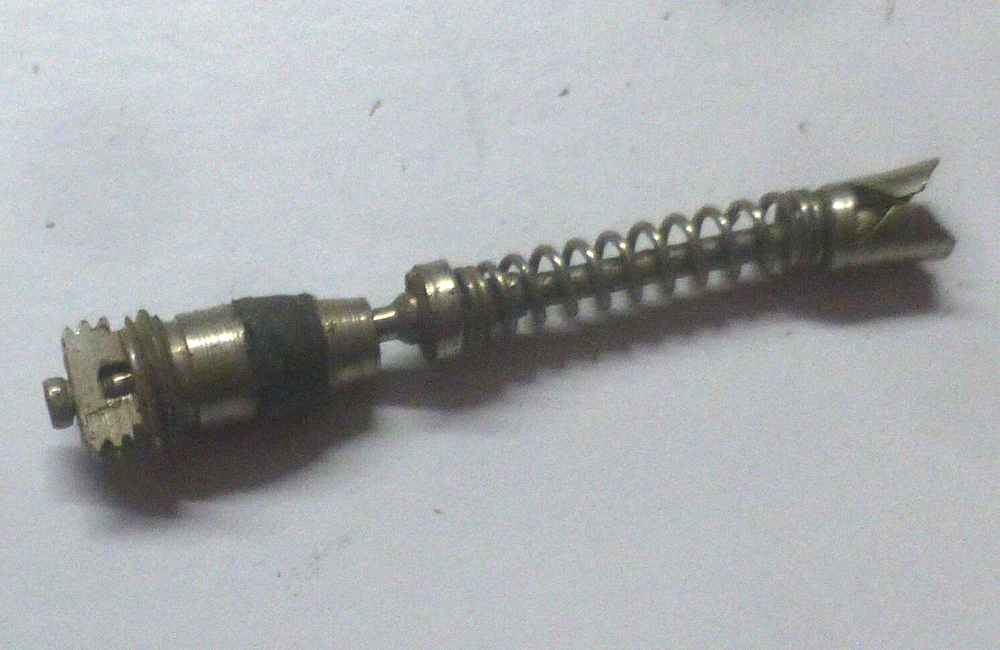
An appropriate service-port cap may also be part of the sealing arrangement, depending on the equipment design. A technician should inspect the core, cap, seal, and specified tightening requirements together.
Homeowners should not press a valve pin to check whether refrigerant remains. That releases refrigerant and does not measure the charge.
Temporary Improvement Versus a Verified Repair
| Observation | What It May Mean | Does It Prove Repair? |
|---|---|---|
| The hissing stopped | Flow or pressure changed, or the sound had another source. | No. |
| Cooling improved overnight | Cooling demand decreased, ice thawed, or another operating condition changed. | No. |
| The detector stopped alarming | The leak is intermittent, temporarily obstructed, or difficult to sample. | No; repeatable testing is needed. |
| The system cooled after a recharge | Charge quantity increased. | No; refrigerant addition does not repair an opening. |
| The defective part was repaired and the system passed appropriate tests | The cause was addressed and sealing was checked. | This provides meaningful evidence of a successful repair. |
Testing note: Fieldpiece’s nitrogen-testing guidance explains why a post-repair pressure test must follow manufacturer limits and account for temperature changes.
Can a Small Pinhole Close Permanently?
A pinhole caused by corrosion should be treated as a material defect. The refrigerant does not rebuild the missing metal.
Corrosion products or contamination might obstruct the opening, but they do not restore the tubing’s original strength. The surrounding area may also contain other weakened spots that have not yet begun to leak.
The appropriate repair depends on location and condition. An accessible damaged section may be repairable, while widespread coil deterioration may justify replacing the coil.
The same principle applies to a cracked joint: temporary changes in how tightly its surfaces meet do not restore a sound connection.
What About AC Stop-Leak Products?
A sealant introduced during service is an attempted chemical repair. It is different from a leak stopping spontaneously.
Products vary in chemistry, claimed applications, and compatibility. A product advertised for one type of air conditioner should not automatically be used in another system.
Carrier’s refrigerant-leak repair guide cautions that sealants may temporarily address very small leaks but can create problems such as restrictions or compressor damage. Its recommended repair approach centers on locating the defect and repairing or replacing the affected component.
Before any additive is considered, the technician should check the equipment manufacturer’s position, lubricant compatibility, and implications for future recovery and service.
Useful questions include:
- Has the actual leak been located?
- Does the equipment manufacturer permit this exact product?
- What happens if the leak returns?
- Will the additive affect future service equipment?
- Will its use be recorded on the service report?
Avoid assuming that every additive has the same risks—or that a seller’s compatibility claim equals equipment-manufacturer approval.
If sealant was previously added, tell the next technician before service begins. The broader issue is explained in Can Refrigerant Become Contaminated During Service?.
Why Did the AC Start Cooling Again?
Cooling performance varies with weather, humidity, airflow, thermostat settings, and operating time. A system with a small refrigerant deficit may appear adequate during a mild evening and struggle on a hot afternoon.
An iced evaporator may also resume cooling after thawing, even though the cause of the icing remains. Restricted airflow can produce similar symptoms, so ice alone does not confirm a refrigerant leak.
Likewise, low charge does not always prove that a leak developed during operation. An incorrect original charge, incomplete previous service, or refrigerant lost during servicing may explain the deficit.
The technician’s task is to establish both whether the charge is incorrect and why. Repeated measured additions strengthen the case for continuing loss, but the leak still needs to be located.
How Do Technicians Confirm a Leak Has Been Repaired?
A useful service report should identify what failed, what was corrected, and how the result was checked.
Locate the source
Technicians may use a compatible electronic detector, approved bubble solution, or another manufacturer-approved method. Detection dye should be used only where permitted.
Finding one leak does not automatically rule out additional leaks. Service connections and recently disturbed components also deserve attention.
Correct the defect
The repair might involve replacing a valve core or seal, remaking a fitting, repairing a permitted tubing section, or replacing a damaged component.
The technician must also address contributing causes, such as rubbing tubing, inadequate support, or vibration. Otherwise, a new part may fail at the same location.
Test under appropriate conditions
The test pressure, medium, and duration must suit the equipment. There is no universal pressure-test setting for every air conditioner.
Temperature changes must be considered when interpreting a pressure hold. A stable gauge during a brief observation is weaker evidence than a documented test performed under appropriate conditions.
Complete evacuation and commissioning
When service has opened the circuit, the technician follows the required evacuation and charging procedure. Final operation is checked against the equipment’s commissioning requirements.
A vacuum hold provides useful information, but it should not be treated as a universal substitute for positive-pressure leak testing. A seal can behave differently under different pressure conditions.
Can You Just Add More Refrigerant and Watch It?
Adding refrigerant may restore cooling temporarily, but it leaves an existing leak unresolved.
The EPA’s homeowner guidance recommends asking a technician to locate and repair a leaking air conditioner rather than repeatedly topping it off.
A small, difficult-to-find leak may require a documented diagnostic follow-up. That is different from assuming it disappeared. The plan should identify what was measured, what remains uncertain, and when the system will be rechecked.
Owners can help by retaining service reports, especially the quantity and type of refrigerant added. “Needed refrigerant again” becomes much more useful evidence when dates and measured amounts are available.
Selecting Refrigerant After the Repair
Replacement refrigerant must match the equipment nameplate and approved service documentation.
For example, if an existing system specifies R410A and the technician has completed the repair and required preparation, the R410A Refrigerant product page provides cylinder information for that service material. Adding it does not seal a leak, and its availability does not establish compatibility with another system.
Professionals can use the Refrigerant Centers catalog to locate the specified refrigerant and review product information before ordering. Do not choose a different refrigerant or blend to compensate for an unresolved leak.
When Should You Stop Running the AC?
Arrange prompt service if cooling continues to deteriorate, ice keeps returning, or the equipment repeatedly shuts down on a fault.
If the coil is visibly frozen, stop cooling operation and follow the manufacturer’s thawing instructions. Repeatedly resetting a protective shutdown does not address its cause.
Refrigerant diagnosis and charging belong with an appropriately qualified technician. The EPA’s Section 608 requirements cover activities such as attaching gauges and adding or removing refrigerant from regulated stationary equipment.
Owners can record symptoms and check accessible filters without opening the refrigerant circuit.
Frequently Asked Questions
Can a refrigerant leak stop when the AC is off?
It may slow or become undetectable, depending on the location and changing pressure or temperature. Other leaks may become more apparent after shutdown. Neither pattern proves repair.
Can oil seal a small refrigerant leak?
Oil may temporarily obstruct a tiny leak path. It does not restore damaged metal or establish a dependable seal. Adding extra oil is not an appropriate leak remedy.
Does frost mean the leak has plugged itself?
No. Frost indicates a cold surface and available moisture. It does not verify that the refrigerant circuit has sealed. Icing can also result from airflow problems.
If the AC holds refrigerant for months, is the leak gone?
A small leak may take months to affect performance noticeably. Long periods of acceptable cooling do not establish that the original defect disappeared.
Does a service valve automatically resealing mean it repaired itself?
A working valve closing after a hose is removed is normal operation. If that valve previously leaked or closes inconsistently, its core, seat, and sealing arrangement should be checked.
What if the technician cannot find the leak?
Ask what methods and operating conditions were used, whether charge loss was confirmed, and what follow-up is planned. An inconclusive inspection should be documented as inconclusive.
Does every refrigerant leak require a new air conditioner?
No. A localized connection or valve problem may be repairable. Extensive corrosion, repeated failures, component availability, and overall equipment condition influence whether replacement makes more sense.
Conclusion
A refrigerant leak can become temporarily blocked or difficult to detect. The original defect may remain, even when the air conditioner starts cooling again.
Treat a suspected leak as unresolved until the cause has been investigated. A dependable repair includes correcting the defective part, checking the result under appropriate conditions, and confirming proper system operation.











