
By Refrigerant Centers Editorial Team
As of today the date stands: a variable refrigerant flow system using a refrigerant with a GWP of 700 or greater must be installed by January 1, 2027, and only if every component was manufactured or imported into the United States before January 1, 2026. EPA’s updated Technology Transitions final rule fact sheet puts the VRF subsector limit at 700 GWP with that January 1, 2027 installation compliance date, plus a narrower allowance running to January 1, 2028 for buildings whose permits were approved before October 5, 2023.
That is roughly fourteen weeks from now, and it matters most to contractors holding high-GWP VRF equipment and to projects whose commissioning date is drifting into the new year. The thing to be clear about is what the date restricts and what it does not. It restricts completing the circuit on a new system — not owning the equipment, not selling it, and not servicing VRF already in the field. Existing systems keep running and keep getting repaired.
The complication is that VRF did not get the relief the residential side got. When EPA revisited the installation deadlines in 2026, split systems came out with the calendar restriction removed and VRF did not, which is why this date is still a live scheduling problem for commercial contractors while it has stopped being one for residential changeouts. The sections below cover exactly what the rule says, which of the two dates a given project falls under, where the line sits between a repair and a new installation, and what to do with equipment and pipeline in the time that is left.
What the Rule Actually Restricts
The AIM Act’s Technology Transitions program is prospective. It sets a GWP ceiling per subsector and applies it to new products and newly installed systems from that subsector’s compliance date forward. It does not reach backward into equipment already operating.
For VRF, the ceiling is 700 GWP. R410A sits well above that, which is why the subsector is affected at all; the A2L refrigerants the industry has moved toward — R454B and R32 among them — sit below it.
EPA states the boundary plainly in the same fact sheet: the rule “does not restrict the continued use of any existing products or RACHP systems,” and components for repairs may continue to be manufactured, imported, and distributed. So there is no forced retrofit, no forced replacement, and no cutoff on keeping an installed system charged and running.
What the date does control is the one act the rule defines as installation. Get that definition wrong and a job you think is a service repair becomes an unpermitted new installation, or the reverse — you replace an entire system you could have legally repaired.
The Two Dates, and Which One Your Project Falls Under
There are two allowances, and they are not alternatives you pick between. The second is a narrower carve-out that also requires satisfying the first rule’s component condition.| Date | What it applies to | Condition that must hold |
|---|---|---|
| January 1, 2025 | The underlying VRF restriction took effect at 700 GWP | Applies to the subsector generally; the allowances below are the exceptions to it |
| January 1, 2026 | Cutoff for component manufacture or import into the U.S. | Every component in the system must predate this; components made after it carry service-only labeling |
| January 1, 2027 | General installation deadline for high-GWP VRF | All components manufactured or imported before January 1, 2026 |
| January 1, 2028 | Extended installation deadline for permitted projects | Building permit approved before October 5, 2023 specifying the high-GWP substance, and all components predate January 1, 2026 |
Dates and conditions from EPA’s Technology Transitions fact sheet and the December 2024 VRF final rule.
Two practical readings follow. First, the component-manufacture condition is doing as much work as the installation date — a system assembled in December 2026 from a module imported in March 2026 does not qualify, whatever the calendar says. Second, the 2028 allowance is narrow by design. A permit approved in 2024 does not get it. The permit has to predate October 5, 2023 and to specify the high-GWP substance, and the legal summary of the VRF installation deadline extension notes that entities relying on it should keep that approved permit as a record and have it available for inspection.
Why VRF Did Not Get the Relief Split Systems Got
This is the part that has caused the most confusion on jobsites, because the headline most people saw in 2026 was that EPA had lifted the R410A installation deadline.
It did — for the residential and light commercial side. NAHB’s summary of the amended final rule describes it as allowing continued installation of R410A units manufactured or imported before January 1, 2025 until existing supplies are depleted, removing the January 1, 2026 calendar cutoff for split systems. Nothing in that action touched VRF.
ACCA flagged the gap while the rule was still a proposal, arguing in its post on how the deadline relief left VRF systems behind that VRF faces the same stranded-inventory and supply-chain problem and asking EPA to extend the same treatment. The final rule addressed residential and light commercial AC and heat pumps, refrigerated transport, industrial refrigeration, retail food, and cold storage. VRF was not among them.
So if someone on your team read that the installation deadline went away, they read something true about a different subsector. For VRF, the December 2024 rule is still the governing action and January 1, 2027 is still the date.
What “Installation” Means — the Definition That Decides Your Job
Everything hinges on one sentence. EPA’s frequent questions on the HFC phasedown gives the definition: installation of a system means “to complete a field-assembled system’s circuit, including charging with a full charge, such that the system can function and is ready for use for its intended purpose.”
Read the three parts, because each one is a scheduling lever:
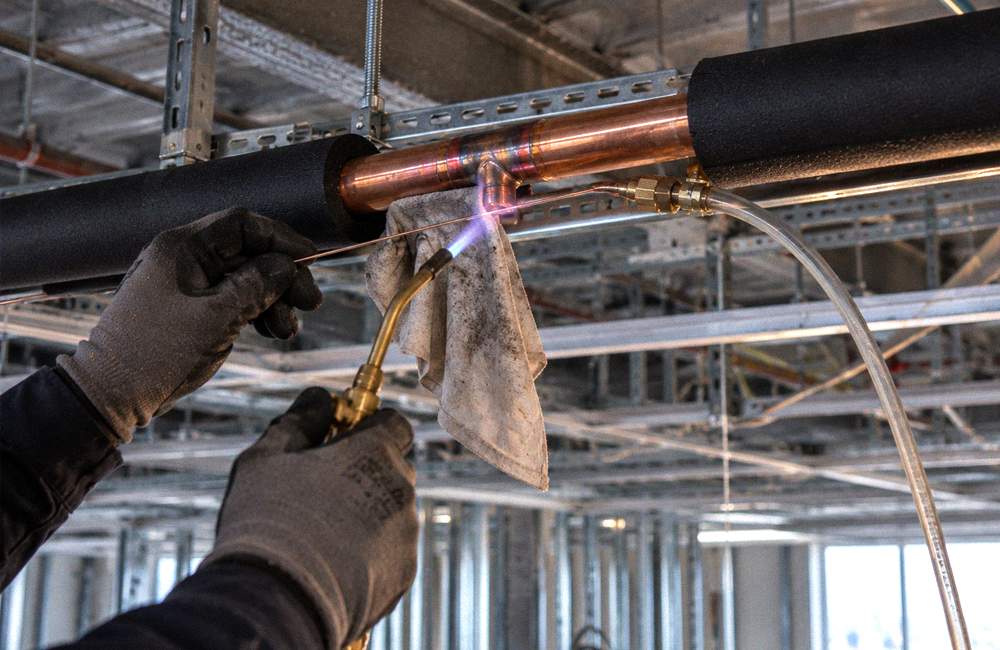
Complete the circuit. Piping run, joints made, system closed. Partial piping is not installation.
Including charging with a full charge. The charge is part of the definition, not a step after it. A system piped, evacuated, and sitting under a holding charge is not installed. This is the single most common misreading — crews assume the mechanical work is what counts and that commissioning is paperwork.
Ready for use for its intended purpose. Functional, not merely assembled.
The practical consequence is that the milestone you have to hit before January 1, 2027 is not “VRF rough-in complete.” It is a charged, functional system. On a large VRF job, the gap between those two states can be weeks — waiting on electrical, controls commissioning, or a building that is not yet conditioned enough to run start-up. Any project whose schedule puts full charge in the first weeks of 2027 needs to be looked at now, not in December.
Repair or New System? Where the Line Falls
The other place this definition bites is service work on existing high-GWP VRF, where a large enough repair stops being a repair.
EPA’s fact sheet identifies activities that count as a new system installation rather than maintenance: assembling a system for the first time from used or new components, increasing cooling capacity, and replacing substantial portions of evaporators and compressor equipment. It also states clearly that you can continue to repair an existing system, “including replacing a major component like a condensing unit or compressor.”
Those two statements coexist, and the distinction is between restoring a system and creating one.| Scope of work | How the rule treats it | What to confirm before quoting |
|---|---|---|
| Replacing a failed compressor or an outdoor module on an existing system | Repair of an existing system; not restricted | Replacement component availability and its service-only labeling |
| Adding indoor units and stepping up outdoor capacity | Increasing cooling capacity is treated as a new system installation | Whether the GWP limit now applies to the resulting system |
| Building a system from salvaged or mixed new and used components | Assembling a system for the first time from used or new components is a new installation | Manufacture or import dates for every component involved |
| Replacing substantial portions of evaporators and compressor equipment together | Treated as a new system installation, not maintenance | Where the scope sits relative to the existing system’s remaining equipment |
| Recovering, repairing a leak, and recharging | Service; the rule does not restrict it | Recovery and certification requirements under the separate refrigerant management rules |
Classifications drawn from EPA’s Technology Transitions fact sheet and phasedown FAQ; scope judgments on a specific system are ultimately the installer’s, so document the reasoning.
If a scope sits near the line, write down which existing equipment stays, which components are new, and their manufacture dates, before the quote goes out. A near-total system replacement described on the invoice as a repair is the kind of record that reads badly later, and the customer needs to know which option they are buying.
Servicing Existing R410A VRF After 2027
Nothing about January 1, 2027 stops you from maintaining the VRF systems already in your service book. The rule is prospective, existing systems may keep operating and receiving maintenance through their useful life, and replacement components can still be manufactured and distributed.
What does change, gradually, is the market around that work. EPA’s own language acknowledges that HFC availability and compatible component availability decrease over time as the phasedown progresses. That is a supply and planning problem, not a compliance one, and it belongs in your customer conversations as a budgeting input rather than as a deadline.
For a facility with a large installed high-GWP VRF base, the useful framing is life-cycle: the system is legal to run and legal to fix indefinitely, and the question is when the cost curve of keeping it — refrigerant cost, component lead time, efficiency, leak history — crosses the cost of replacement. That is a capital-planning conversation to open now, while the owner has years rather than a forced date.
What the Labeling on the Shelf Tells You
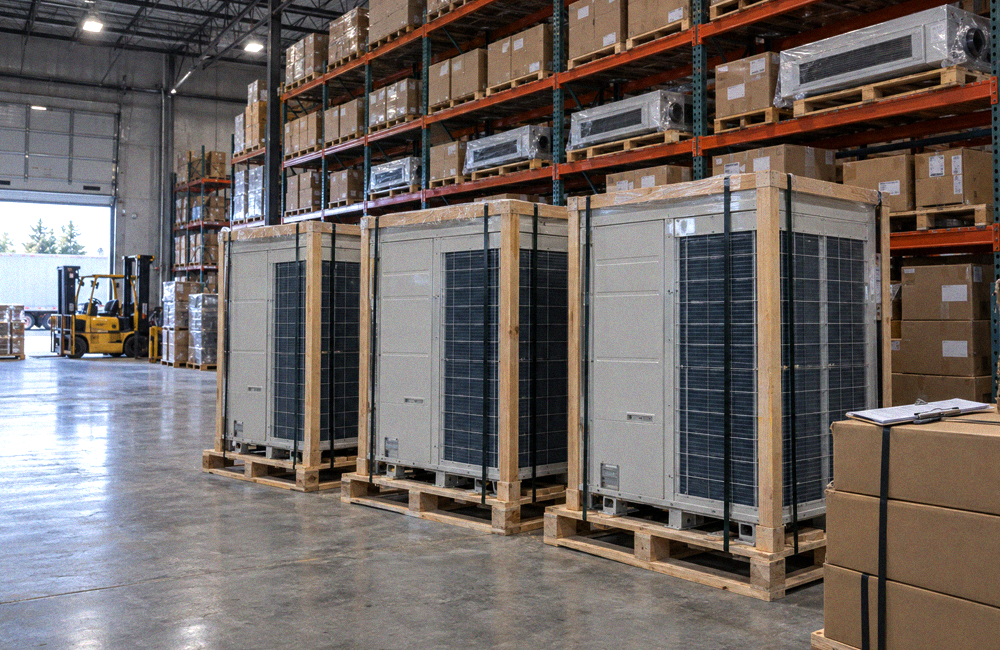
There is a physical check available to anyone staring at a box in a warehouse, and it exists precisely because of this rule.
Components using higher-GWP HFCs manufactured on or after January 1, 2026 must be labeled for servicing existing equipment only, along with the HFC or blend used or intended for use and the date of manufacture. Components manufactured before that date required no new labeling.
So a service-only label is a hard signal: that component cannot lawfully go into a new VRF installation, and its presence in a new-system build is a compliance problem regardless of what date the system is commissioned. Conversely, an unlabeled component is not self-proving — absence of a label is not documentation of a pre-2026 manufacture date. Keep the purchase records, packing lists, and any date coding you can read, because the burden of showing a component predates the cutoff falls on whoever installed it.
This is worth ten minutes of warehouse walking before the end of the year. Sorting VRF stock into “documented pre-2026,” “service-only labeled,” and “cannot establish” is the difference between knowing what you can still place and guessing.
The Permit Exception: How to Actually Claim 2028
The extra year is real but it is narrow, and most projects people hope qualify do not.
The conditions, together: the building permit must have been approved before October 5, 2023; that approved permit must specify use of the high-GWP substance; and every component still has to have been manufactured or imported before January 1, 2026. Miss any one and the project falls back to January 1, 2027.
If you think a job qualifies, do three things now rather than in a dispute later. Pull the approved permit and confirm the approval date on its face, not the application date. Confirm the permit document actually specifies the refrigerant — a permit silent on refrigerant is weaker ground than people assume. And file that permit copy with the project’s compliance records so it is retrievable on request, which is exactly what the rule’s summary contemplates.
Also check whether anything about the project has been re-permitted or substantially revised since. A superseding permit issued later is a different document from the one you are relying on.
What to Do With VRF Inventory You Already Own
Fourteen weeks is enough time to place equipment deliberately and not enough time to do it casually. A practical sequence:
Inventory with dates, not counts. Every high-GWP VRF outdoor module, branch controller, and indoor unit, with whatever documentation establishes manufacture or import before January 1, 2026. A count without dates is not usable information for this purpose.
Match stock to pipeline by commissioning date, not by contract date. Sort projects by when the system will actually be charged and functional. That is the milestone the rule measures.
Move the deliverable equipment to the projects that will finish. A module sitting on a project that will commission in February helps nobody; on a project commissioning in November it is placed.
Identify what will not be placed, early. Equipment that cannot be installed before the date still has value as service stock for existing high-GWP VRF in your own service base, since repair components remain lawful. That is a different accounting than a new-installation sale, and treating it as service inventory now is better than discovering it in January.
Document the decisions. For each system installed under the 2027 allowance, keep the component records with the job file. Refrigerant Centers gets calls every year from contractors trying to reconstruct which compliance path a job took after the fact, and the reconstruction is always harder than the record would have been.
Pipeline Triage Before the Date
Sort the active jobs into three buckets and act differently on each.
Comfortably before the date. System charged and functional with real schedule float — weeks, not days. Confirm the component records exist and move on.
Tight. Commissioning lands in December. These are the ones worth intervening on: pull the charge-and-startup milestone forward in the schedule, get the electrical and controls dependencies named and owned, and make sure nobody is planning to leave the system on a holding charge over the holidays. The definition requires a full charge and a functional system, and a crew that treats start-up as a January formality will miss by a matter of days.
Past the date. Commissioning in 2027 with no qualifying pre-October-2023 permit. These need a decision made in the open, now, with the owner and the GC: change the equipment to a system at or below 700 GWP, or move the schedule. Both cost money and one of them costs less the earlier it is raised. Sitting on it until December converts a design decision into an emergency.
For the third bucket, be specific about what changing equipment involves rather than presenting it as a model swap. A move to an A2L refrigerant brings its own requirements — different equipment, and code and safety provisions for mildly flammable refrigerants that affect where equipment and piping can go. The ICC’s overview of A2L refrigerants in the built environment is the right starting point for the code side, and the adopted code in your jurisdiction governs.
Talking to Owners and GCs About the Date
Three things go wrong in these conversations, and all three are avoidable.
The owner has heard the deadline went away. Because for split systems it largely did. State the distinction in one sentence — the 2026 relief covered residential and light commercial split systems, not VRF — and point at the EPA fact sheet rather than arguing from memory.
The owner thinks their existing system is affected. It is not. Nothing requires replacing or retrofitting installed VRF, and service continues. Say that first, because an owner who believes their building is about to become non-compliant will make a worse decision than one who understands the rule is prospective.
The schedule conversation happens too late. The milestone is a charged, functional system. If the project’s critical path has start-up in January, that is a commercial conversation to have in September, in writing, with the options and their costs named.
Put the compliance path in the project documentation the same way you would a code path: which allowance the system is installed under, the component date evidence, and the permit copy if the 2028 route applies.
What Could Still Change
This is a moving regulatory area and the honest position is that the current state is current, not permanent.
Industry groups have asked EPA to extend the installation-deadline relief to VRF, and EPA has revisited these deadlines more than once — the December 2023 amendment on residential equipment, the December 2024 VRF rule, and the May 2026 reconsideration are all evidence that the dates move when petitions land. The 2026 action is also a reminder that relief can arrive for some subsectors and not others.
What that means operationally: plan to the date as it stands, because a plan built on relief that has not been granted is not a plan. But check the status before making an irreversible decision on a large project, and check it at the source. EPA’s regulatory actions for Technology Transitions page lists the rules and amendments as they are issued, and it is the only place worth treating as authoritative on what is in effect today. Trade press is faster but frequently covers proposals in language that reads like final action.
Frequently Asked Questions
Does the R410A installation relief apply to VRF systems?
No. The 2026 amended rule removed the calendar installation deadline for residential and light commercial split systems manufactured or imported before January 1, 2025. VRF was not included, and the January 1, 2027 date from the December 2024 VRF rule still applies.
What exactly has to be done by January 1, 2027?
The system has to be installed as the rule defines it — the field-assembled circuit completed, charged with a full charge, and ready for use for its intended purpose. Piping complete and a holding charge does not satisfy it.
Can I still service my existing high-GWP VRF system after the deadline?
Yes. The rule does not restrict continued use of existing systems, and repair components may still be manufactured, imported, and distributed. Availability of refrigerant and components will tighten over time, which is a planning matter rather than a compliance one.
What happens to VRF equipment we already bought and cannot install in time?
Owning and selling it is not restricted; installing it in a new system after the date is. Equipment that will not be placed in time has continuing value as service stock for existing high-GWP VRF, since repair remains lawful.
Does replacing a VRF outdoor module count as a new installation?
Replacing a major component such as a condensing unit or compressor on an existing system is treated as a repair. Increasing cooling capacity, assembling a system from used or new components for the first time, or replacing substantial portions of evaporators and compressor equipment is treated as a new installation.
How do I know whether a component was manufactured before January 1, 2026?
Components using higher-GWP HFCs manufactured on or after that date must be labeled for servicing existing equipment only, with the refrigerant identified and the date of manufacture shown. An unlabeled component is not proof of an earlier date, so keep purchase records and readable date coding.
Do we qualify for the January 1, 2028 deadline?
Only if the building permit was approved before October 5, 2023 and specifies use of the high-GWP substance, and all components were manufactured or imported before January 1, 2026. Keep the approved permit as a record and be able to produce it.
What is the GWP limit for the VRF subsector?
700. R410A is above it; the A2L refrigerants the industry has moved to, including R454B and R32, are below it.
Where This Leaves the Next Fourteen Weeks
The work is mostly clerical and mostly overdue: dates attached to inventory, commissioning milestones pulled into view, permits pulled and read, and the projects that cannot land before January 1 raised with owners while a design change is still cheaper than a delay. The rule itself is narrow — one defined act, one date, one GWP number, and a documented exception — and none of it touches the systems already running in your customers’ buildings.
Check EPA’s actions page before you commit a large project either way, because this date has moved before and the subsectors have not moved together.











