
Air inside an AC refrigeration system can raise operating pressure, interfere with heat rejection, reduce cooling performance, and increase compressor stress. The moisture carried in with that air can create additional problems, including corrosion, lubricant deterioration, and ice restrictions at cold metering points.
Here, “inside” means inside the sealed tubing and components that carry refrigerant. Air flowing across the evaporator and condenser is essential to normal operation. Air trapped within the refrigerant circuit is contamination.
The effects depend on how much entered, how much moisture accompanied it, and how the equipment operates. A brief exposure does not automatically destroy a compressor, but known air contamination should be corrected before normal operation continues.
Why Air Behaves Differently From Refrigerant
An air conditioner moves heat by repeatedly evaporating and condensing its refrigerant. Air does not participate in that cycle in the same way.
Nitrogen and oxygen—the main gases in air—remain gaseous at ordinary AC operating temperatures and pressures. Technicians therefore call them noncondensable gases.
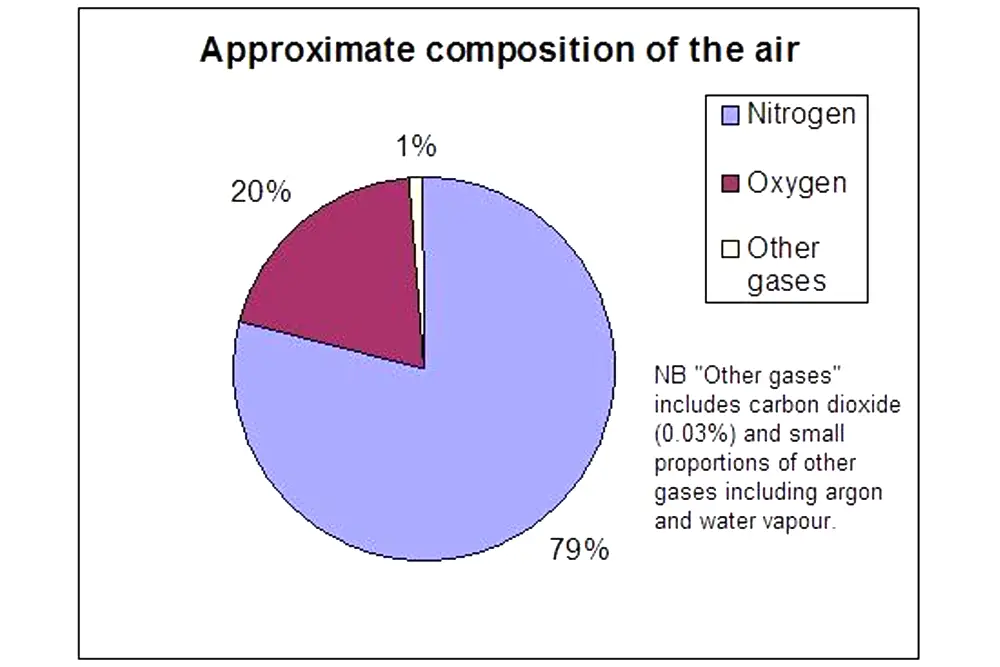
Copeland’s refrigeration-system components manual explains that trapped nitrogen and oxygen contribute their own pressure in addition to the refrigerant’s pressure. Noncondensables can accumulate in the condenser and receiver, where fitted.
This means a high-side gauge may register more pressure than the refrigerant’s actual condensing temperature would suggest. Treating that entire reading as refrigerant saturation pressure can lead to misleading calculations.
What Problems Can Air Cause?
Higher head pressure and poorer heat rejection
Noncondensables can interfere with the condenser’s ability to reject heat while also contributing additional pressure.
The resulting operating conditions may make the compressor work against a greater pressure difference. Depending on the equipment and severity, cooling performance can decline, operating temperatures can rise, and protective controls may stop the system.
High pressure is a warning sign, but it does not identify the cause by itself.
Reduced cooling efficiency
A contaminated circuit may require longer operation to meet the same cooling demand. In more severe cases, it may fail to maintain the thermostat setting.
There is no universal efficiency penalty for “air in the system.” The outcome depends on contamination quantity, condenser performance, load, controls, and system design.
Moisture-related damage
The water vapor that enters with air presents a different set of risks.
Under suitable conditions, moisture can freeze at a cold metering point and restrict refrigerant flow. Moisture can also participate in chemical reactions that degrade lubricant and produce corrosive compounds.
Copeland’s installation and service manual describes how air, moisture, and heat can contribute to acid formation, sludge, corrosion, and oil breakdown. A system exposed to humid air may therefore need both gas removal and thorough dehydration.
Misleading diagnostic readings
Technicians use pressure-temperature relationships to evaluate refrigerant behavior. Those relationships assume the correct refrigerant composition.
If the measured pressure includes a significant contribution from noncondensables, apparent subcooling or other calculated values may be misleading. Adding or removing refrigerant solely to “correct the pressure” can create an additional charging problem.
How Does Air Get Into the Refrigerant Circuit?
Air usually enters through installation, service, or an opening exposed to atmospheric pressure.
Common opportunities include:
- Tubing or replacement components left uncapped
- Charging a newly installed line set without proper evacuation
- Service hoses containing air when refrigerant is transferred
- A leak in the evacuation setup
- Incomplete evacuation after repairs
- Contaminated recovered refrigerant or transfer equipment
- An open or leaking circuit operating below atmospheric pressure
A refrigerant leak does not automatically suck air inward. If the pressure at the opening is above atmospheric pressure, the primary flow is outward.
Air entry becomes a stronger concern when the circuit is opened, emptied and exposed, or pulled below atmospheric pressure while a leak exists. Service history is therefore useful evidence: symptoms beginning immediately after a repair deserve particular attention.
A charged system cannot remove trapped air simply by running longer.
Air, Moisture, and Low Refrigerant Are Different Problems
These faults can coexist, but they should not be treated as interchangeable explanations.| Condition | Main Concern | What the Technician Must Establish |
|---|---|---|
| Air or other noncondensables | Additional pressure and impaired heat rejection | Whether abnormal readings remain after airflow, load, and charge-related causes are evaluated |
| Moisture | Chemical deterioration or ice restriction under suitable conditions | Exposure history, dehydration quality, and contamination severity |
| Low refrigerant charge | Insufficient refrigerant inventory for proper operation | Correct charge and the reason for any deficit |
| Excess refrigerant charge | Abnormal refrigerant distribution and potentially elevated pressure | Charge quantity and manufacturer charging measurements |
| Poor condenser airflow | Insufficient heat removal outside the refrigerant circuit | Coil cleanliness, fan operation, obstructions, and air recirculation |
Diagnostic note: Fieldpiece’s guidance on testing for noncondensables calls for considering noncondensables when high head pressure remains after condenser cleaning, airflow correction, and routine checks. These patterns are diagnostic clues rather than standalone proof.
How Do Technicians Diagnose Air in an AC System?
A sound diagnosis combines service history, operating measurements, and elimination of other causes.
Check the ordinary causes first
Before attributing high pressure to air, the technician checks the condenser, fan, operating load, charge history, and equipment controls.
A dirty condenser or failed fan can produce high-pressure symptoms without any air contamination. Condenser air recirculation can cause similar trouble even when the coil looks clean.
Verify the measurements
Gauge accuracy, temperature-probe placement, refrigerant selection, and operating stability all matter.
For blends, the technician must use the appropriate pressure-temperature data. A wrong refrigerant setting can create misleading saturation temperatures even in a clean system.
Suction pressure, superheat, subcooling, and compressor current should be interpreted together using the manufacturer’s procedure.
Consider a controlled pressure-temperature check
Where appropriate, a technician may compare pressure and temperature after the relevant refrigerant and components have reached a stable condition.
Thermal stabilization can take time. A recently operating compressor, sun-heated cabinet, isolated circuit section, or refrigerant migration can make a quick comparison unreliable.
An unexpected relationship may support further investigation, but it does not independently distinguish air from every other cause, including an incorrect refrigerant mixture.
Evaluate moisture separately
Air contamination does not reveal exactly how much water entered.
Depending on exposure and failure history, the technician may inspect an installed moisture indicator, evaluate oil condition, or perform other appropriate tests. A moisture indicator does not measure the amount of nitrogen or oxygen in the charge.
How Is Air Removed From an AC Refrigeration System?
For a conventional sealed AC system with confirmed contamination, the usual corrective approach involves recovering the charge, correcting the entry point, evacuating the circuit, and charging it correctly.
The exact work depends on whether the system was briefly opened, badly contaminated, or damaged during operation.
Recover the refrigerant
A recovery machine removes refrigerant into an appropriate container. A vacuum pump should not be used as a substitute for refrigerant recovery.
Questionable recovered material must be identified and handled appropriately. It should not automatically be returned to the cleaned system or combined with known-clean refrigerant.
Correct the cause
The technician repairs leaks or service defects and checks the setup that allowed air entry.
Otherwise, even a thorough evacuation can be undone by a leaking hose, open connection, or unresolved system leak.
Evacuate and dehydrate
A suitable vacuum pump removes residual gases and helps remove moisture before charging.
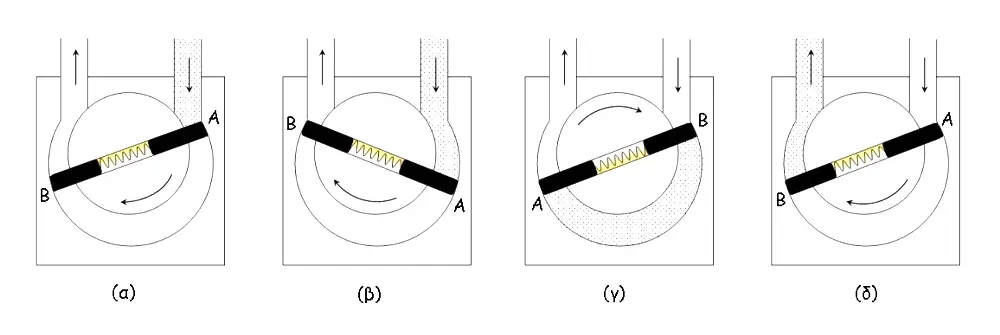
Fieldpiece’s vacuum-pump overview explains the pump’s role in removing air and moisture before refrigerant is introduced.
The technician uses the equipment manufacturer’s evacuation target and verification procedure. Pump running time alone is not a reliable completion test.
Address residual moisture and damage
A filter-drier can capture moisture and certain contaminants within its rated capacity. It cannot serve as a general air separator.
Filter-drier replacement, oil evaluation, or additional cleanup may be needed according to the equipment instructions and contamination severity. A prolonged exposure to humid air requires more consideration than a brief, controlled component change.
Recharge and verify operation
Once the circuit is prepared, the technician introduces the correct refrigerant and verifies operation under the specified conditions.
Successful completion includes resolving the original abnormal readings—not merely adding refrigerant until the supply air feels cold.
Does Pulling a Vacuum for 30 Minutes Guarantee the Air Is Gone?
No. A fixed time does not prove an acceptable evacuation.
System volume, moisture load, hose restrictions, pump condition, temperature, and leaks affect the result. A pump can run for a long time while the system remains inadequately evacuated.
Fieldpiece’s vacuum-gauge guidance emphasizes measuring vacuum and observing what happens after the pump is isolated.
A rising reading requires interpretation. Moisture, outgassing, a system leak, or a leaking test connection can affect it. The gauge should measure the system’s condition rather than simply the vacuum available at the pump inlet.
Ask for the final vacuum reading and isolation-test result, along with the manufacturer’s acceptance criteria.
Can You Bleed Air Out Through a Service Valve?
Do not attempt to release “just the air” from a conventional AC system.
A service valve is not a selective air outlet. Opening it can release refrigerant along with other gases, and the resulting pressure change does not prove that contamination has been removed.
The EPA’s prohibition on venting refrigerants restricts intentional releases of regulated refrigerants during service.
Some specialized refrigeration equipment has engineered purge systems. Those systems operate according to dedicated manufacturer procedures and do not justify manually venting a residential AC.
Likewise, do not use compressed air or oxygen to pressure-test a refrigerant circuit. Use the manufacturer-approved test medium and procedure.
Choosing Refrigerant After Contamination Is Corrected
Adding fresh refrigerant does not remove trapped air or reverse moisture damage. Product selection comes after the repair and preparation work.
For an existing system that specifies R410A, a qualified technician can review the R410A Refrigerant product information after confirming the nameplate and service requirements. This is a service material for compatible equipment, not a treatment for contamination.
The Refrigerant Centers catalog provides other refrigerant listings for professionals identifying the specified product. Refrigerants must not be mixed or substituted merely to change a pressure reading.
What Should an Equipment Owner Do?
Tell the technician whether the problem started after installation, a refrigerant recharge, or component replacement. Provide previous service records if available.
Useful questions are:
- What evidence suggests noncondensables?
- Were condenser airflow and charge-related causes checked?
- How will the contaminated refrigerant be handled?
- What evacuation and verification criteria apply?
- What final operating measurements will be recorded?
If the equipment repeatedly trips, cools poorly, or makes abnormal mechanical noises, stop repeatedly resetting it and arrange service. There is no reliable “safe number of hours” for operating with an unknown contamination level.
Frequently Asked Questions
Can an AC still cool with air inside the system?
Yes. Some contamination may allow cooling while reducing performance or increasing operating stress. Cold supply air does not confirm that the refrigerant circuit is clean.
Will air disappear as refrigerant circulates?
No. A conventional sealed AC does not consume noncondensable gases or automatically discharge them. Circulation changes their distribution, not their total presence.
Does every refrigerant leak let air in?
No. Flow direction depends on pressure at the opening. Air entry becomes a concern when the circuit is open or below atmospheric pressure.
Can air make subcooling appear high?
It can distort pressure-derived saturation temperature and therefore apparent subcooling. The result must be evaluated with temperature measurements, refrigerant identity, and other operating evidence.
Is nitrogen left after pressure testing also a problem?
Yes. Nitrogen is useful as an approved test gas, but it must be removed through the proper preparation process before charging. Residual nitrogen becomes a noncondensable contaminant.
Will a filter-drier remove the air?
No. A filter-drier has a role in moisture and contaminant control; it does not replace evacuation for removing noncondensable gases.
Does air contamination always require a new compressor?
No. Corrective work depends on exposure, operating history, and whether damage occurred. Prompt diagnosis may allow the system to be restored without compressor replacement.
Conclusion
Air inside the refrigerant circuit can increase pressure and interfere with cooling. Moisture entering with it can add chemical and mechanical problems that require separate attention.
High pressure alone is not a diagnosis. The effective response is to verify the cause, correct the contamination source, recover refrigerant appropriately, and confirm proper evacuation and charging before returning the equipment to service.











