
A refrigerant blend does not normally settle into permanent liquid layers inside a properly sealed cylinder. It is not like an oil-and-water mixture that visibly separates while sitting on a shelf.
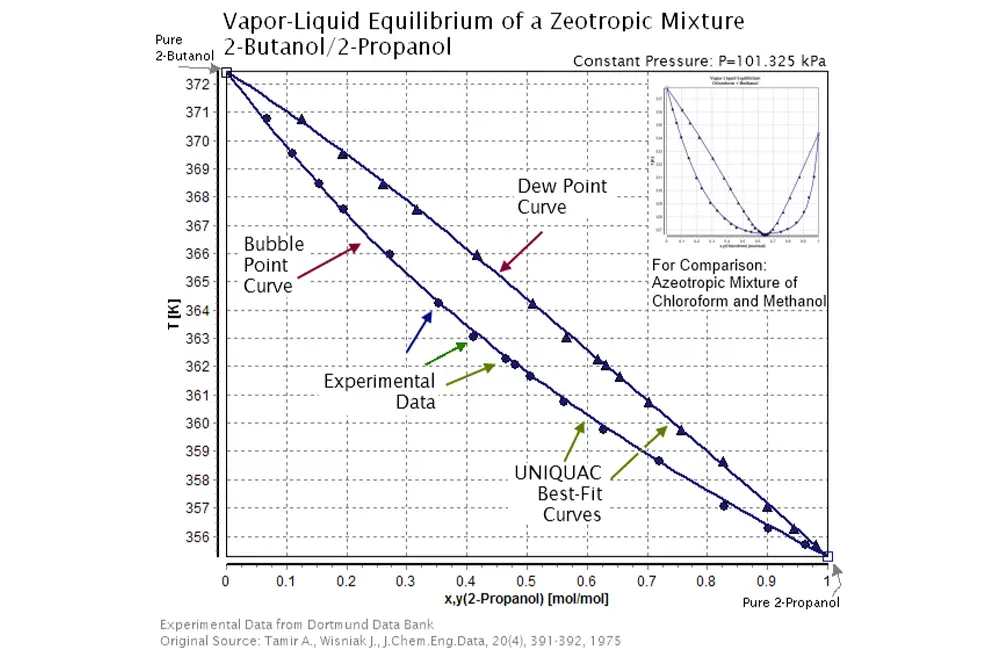
However, a blend can exist as both liquid and vapor inside the cylinder, and those two phases may not have exactly the same composition. In a zeotropic blend, the vapor above the liquid is usually richer in the more volatile component. Repeatedly withdrawing vapor can therefore alter both the refrigerant delivered to the system and the composition remaining in the cylinder.
This process is called fractionation. It is the reason most zeotropic and near-azeotropic refrigerant blends should be removed from the cylinder as liquid, even when the technician subsequently meters or flashes that liquid into vapor before it enters the system.
Does the Refrigerant Actually Separate Into Layers?
Usually, no.
When a factory-prepared refrigerant blend is stored correctly in an undamaged, sealed cylinder, its liquid portion is intended to remain a mixed composition. The heavier component does not simply sink to the bottom while the lighter component floats at the top.
What does occur is vapor-liquid equilibrium. Some of the refrigerant is liquid, while another portion occupies the space above the liquid as vapor. Because the blend’s components have different boiling points and vapor pressures, the component proportions in those two phases can differ.
The Copeland Fundamentals of Refrigeration manual explains that the higher-vapor-pressure component of a zeotropic mixture tends to be present at a higher concentration in the vapor phase. That difference between liquid and vapor composition is the basis of fractionation.
Therefore, when technicians say that a blend has “separated in the cylinder,” they often mean one of three things:
- The liquid and vapor phases have different component ratios.
- Vapor has been removed and the remaining liquid composition has shifted.
- The cylinder contains an unintended refrigerant mixture or another contaminant.
Only the first two describe fractionation. The third is contamination and requires a different response.
Pure, Azeotropic, and Zeotropic Refrigerants Behave Differently
Single-component refrigerants
A single-component refrigerant contains one refrigerant compound. Its vapor and liquid are the same chemical, so withdrawing vapor cannot change the identity of the remaining refrigerant through blend fractionation.
That does not protect it from contamination. Moisture, air, oil, debris, or another refrigerant can still enter through improper handling.
Azeotropic blends
An azeotropic blend behaves much like a single substance during boiling and condensation. At its azeotropic composition, the liquid and vapor phases have essentially the same component proportions.
A true azeotropic blend is much less susceptible to composition shift during phase change. The cylinder and refrigerant manufacturer’s withdrawal instructions must still be followed.
Zeotropic blends
The components of a zeotropic blend have different volatilities. As the refrigerant changes phase, the liquid and vapor compositions can differ significantly.
Zeotropic blends also have a bubble-point temperature, a dew-point temperature, and a temperature glide between them. Bubble-point data are normally used for subcooling calculations, while dew-point data are normally used for superheat calculations.
Near-azeotropic blends
A near-azeotropic blend is technically zeotropic, but the difference between its liquid and vapor behavior is smaller. Fractionation risk may be reduced, yet it is not automatically zero.
Copeland recommends withdrawing near-azeotropic blends as liquid to minimize composition changes, just as it does for more strongly zeotropic mixtures.
What Happens Under Different Cylinder Conditions?
| Cylinder Condition | What Happens | Recommended Response |
|---|---|---|
| Sealed and stored at a stable temperature | Liquid and vapor reach equilibrium. Their compositions may differ, but the liquid does not normally form permanent component layers. | Follow the cylinder label and manufacturer instructions when withdrawing refrigerant. |
| Liquid is withdrawn correctly | The delivered refrigerant more closely represents the blend’s intended composition. | Measure the charge by weight and control the liquid before it reaches the compressor. |
| Only part of the cylinder is withdrawn as vapor | The outgoing vapor may be richer in the more volatile component, shifting the composition left in the cylinder. | Stop vapor withdrawal and evaluate the cylinder’s service history before further use. |
| Cylinder is nearly empty | Any prior fractionation can become more significant in the remaining material. | Follow refrigerant-manufacturer guidance concerning residual cylinder contents. |
| Cylinder has leaked | Selective vapor loss may alter the remaining blend composition. Refrigerant may also be lost to the atmosphere. | Isolate the cylinder and obtain qualified handling instructions. Do not continue charging from a damaged container. |
| Another refrigerant is added | The contents become a contaminated mixture rather than an approved refrigerant blend. | Label and isolate the cylinder for appropriate recovery or reclamation handling. |
Source note: The phase and charging behavior summarized above follows the blend discussion in Copeland’s refrigeration fundamentals and the liquid-withdrawal guidance in Honeywell’s technical presentation on refrigerant blends.
Why Must a Refrigerant Blend Be Removed as Liquid?
Withdrawing liquid helps preserve the blend’s intended component ratio.
When liquid is taken from a properly handled cylinder, the withdrawn material represents the bulk liquid mixture much more closely than vapor taken from the headspace. Vapor withdrawal can preferentially remove the more volatile component.
This concern becomes especially important when only part of a cylinder is used. If the complete contents were transferred, every component would ultimately leave the cylinder. In everyday service, however, technicians commonly use a partial cylinder for several jobs.
Official manufacturer procedures consistently address this issue. For example, Chemours blend-charging guidance directs technicians to remove its specified blend from the cylinder as liquid to maintain composition.
That does not mean liquid should be allowed to rush directly into an operating compressor.
Depending on the system and approved procedure, the technician may:
- Charge liquid into an appropriate high-side location while the system is off
- Use a manifold or throttling device to meter the refrigerant
- Flash the withdrawn liquid into vapor before it enters the suction side
- Use another method specified by the equipment and refrigerant manufacturers
Uncontrolled liquid entering a compressor can cause severe mechanical damage. “Liquid withdrawal from the cylinder” and “feeding liquid into the compressor” are not the same instruction.
Should the Cylinder Be Turned Upside Down?
It depends entirely on the cylinder design.
Some disposable cylinders without internal dip tubes are positioned so the valve is below the liquid when liquid withdrawal is required. Other cylinders have a liquid valve, a vapor valve, an internal dip tube, or specific operating-position markings.
Never assume that every blend cylinder should be inverted. Check:
- The cylinder label
- Valve identification
- Directional arrows on the cylinder or carton
- The refrigerant manufacturer’s charging instructions
- The supplier’s documentation
- The service-equipment instructions
A refillable recovery cylinder may have separate liquid and vapor connections. That design should not be handled as if it were a disposable supply cylinder.
Can Shaking or Rolling the Cylinder Restore the Blend?
Routine shaking is generally not the solution to fractionation.
If a sealed cylinder has simply been sitting in storage, its bulk liquid has not normally separated into permanent layers that require remixing. The important action is withdrawing the blend from the correct liquid connection or position.
If vapor has already been removed repeatedly, one or more components may have physically left the cylinder in disproportionate amounts. Shaking cannot return those missing components.
Likewise, shaking cannot correct:
- A cylinder containing the wrong refrigerant
- A blend contaminated with another recovered refrigerant
- Moisture, air, oil, or debris in the cylinder
- Composition loss caused by a leaking valve or damaged container
Do not roll, drop, strike, or artificially heat a refrigerant cylinder in an attempt to “blend” its contents. Use only handling methods authorized by the cylinder and refrigerant manufacturers.
Does Storage Temperature Cause Separation?
Temperature changes cylinder pressure and the quantity of refrigerant existing as vapor, but ordinary temperature variation does not normally cause a sealed blend to form permanent component layers.
A cylinder moved from a cold area to a warm service location needs time to approach a stable temperature. During that transition, pressure readings can change substantially even when the refrigerant composition is acceptable.
Uneven heating can also create temporary temperature gradients within the cylinder. A pressure reading taken immediately after moving or warming the container may not represent stable equilibrium.
Never use an open flame or uncontrolled heat source to raise cylinder pressure. Cylinder storage and conditioning must follow the product label, Safety Data Sheet, cylinder requirements, and applicable service procedures.
Why Charging by Weight Still Matters
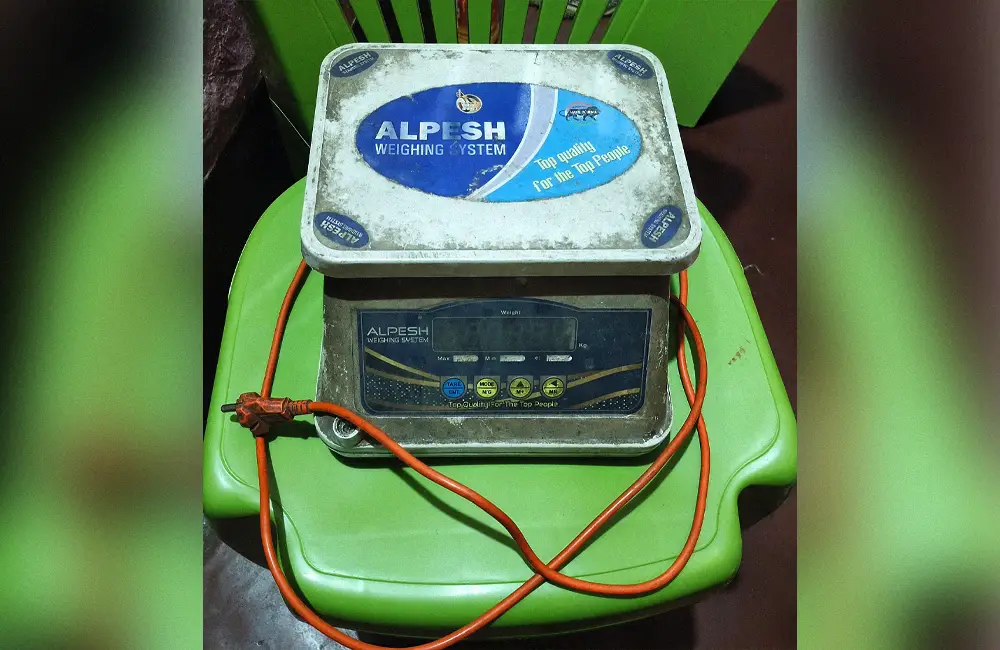
Liquid withdrawal protects composition, while weighing protects charge quantity. Both controls are necessary.
System pressure alone does not establish the correct charge. Pressure changes with indoor and outdoor conditions, airflow, load, equipment design, and operating state.
The technician should begin with the manufacturer’s specified charge and approved charging procedure, then commission the equipment using the required measurements. These may include superheat, subcooling, temperature split, airflow, receiver level, sight-glass condition, or other system-specific criteria.
For zeotropic blends, the correct side of the pressure-temperature data must also be used:
- Use the dew-point value when calculating superheat.
- Use the bubble-point value when calculating subcooling.
- Follow the manufacturer’s instructions where a midpoint or other reference is specified.
Can a Blend Fractionate After a System Leak?
It can, but the amount depends on the refrigerant, the leak location, the system’s operating state, the quantity lost, and whether liquid, vapor, or two-phase refrigerant was present at the leak.
A small leak does not automatically mean the entire charge has become unusable. Near-azeotropic blends may experience only a limited composition shift under some leak conditions. More strongly zeotropic blends can be more sensitive.
Technicians should not repeatedly add refrigerant without locating the leak and evaluating the remaining charge. Manufacturer guidance may permit repair and recharge under particular conditions, while other situations may call for recovering the full charge and replacing it with a new, correctly composed charge.
No universal rule applies to every blend. The specific refrigerant and equipment documentation control the decision.
Fractionation Is Not the Same as Cross-Contamination
Fractionation occurs among the intended components of an approved blend because of differences between liquid and vapor behavior.
Cross-contamination occurs when another refrigerant or unwanted material enters the cylinder or system.
Examples include:
- Recovering two different refrigerants into the same cylinder
- Charging an unidentified refrigerant into an existing system
- Using service equipment containing residual incompatible refrigerant
- Adding an unapproved component to alter system pressure
- Allowing oil, moisture, air, or debris into recovered refrigerant
The EPA GreenChill retrofit guidance advises against mixing refrigerants with different designations in a recovery cylinder and recommends removing blends from their supply cylinders as liquid.
For a broader explanation of mixed refrigerants, moisture, acids, and service-equipment carryover, see Can Refrigerant Become Contaminated During Service?.
What Should You Do With a Questionable Partial Cylinder?
A partial cylinder may remain usable when its identity is certain, the container is undamaged, and its entire service history confirms that refrigerant was always removed correctly.
Stop using it if:
- The label is missing or unreadable
- The cylinder has been connected to unidentified equipment
- Different refrigerants may have entered it
- A zeotropic blend was repeatedly removed as vapor
- The valve or container appears to have leaked
- The cylinder was exposed to improper heat or physical damage
- The contents do not behave as expected
- Its prior handling cannot be verified
Do not transfer questionable material into a clean cylinder to see whether it “mixes back together.” Isolate and label it, then contact the supplier, consolidator, or qualified reclaimer for instructions.
The EPA distinguishes recovery, recycling, and reclamation: recovery only removes and stores refrigerant, while reclamation reprocesses it to applicable purity specifications and verifies the result analytically.
How to Prevent Blend-Cylinder Problems
Technicians can reduce fractionation and contamination risk by following a consistent process:
- Confirm the equipment refrigerant before opening the cylinder.
- Read the cylinder label and Safety Data Sheet.
- Identify whether the refrigerant is a blend.
- Determine whether the cylinder has a dip tube or separate liquid valve.
- Remove zeotropic and near-azeotropic blends as liquid unless the applicable manufacturer explicitly directs otherwise.
- Use a purpose-designed refrigerant scale.
- Meter the liquid according to the approved system procedure.
- Protect the compressor from uncontrolled liquid ingestion.
- Keep cylinder valves closed and capped when not in use.
- Record the refrigerant type and amount used.
- Never recover a different refrigerant into the supply cylinder.
- Keep unknown recovered refrigerant separate from clean material.
After compatibility has been confirmed from the equipment nameplate and manufacturer documentation, technicians can review relevant commercial-refrigeration refrigerants or the broader Refrigerant Centers refrigerant catalog. These collections do not establish that any refrigerant is interchangeable with the existing charge.
Frequently Asked Questions
Do all blended refrigerants need to be charged as liquid?
The safest general rule for zeotropic and near-azeotropic blends is to remove them from the cylinder as liquid. Always confirm the procedure on the refrigerant label and in the manufacturer’s documentation.
Is the vapor at the top of a blend cylinder the wrong refrigerant?
It is not necessarily the “wrong” refrigerant, but its component proportions may differ from the nominal liquid composition. Removing that vapor for a partial charge can create an off-composition charge.
Will an unused sealed blend cylinder separate during long storage?
It should not form permanent layers merely because it has been stored. Verify that the cylinder remains sealed, undamaged, correctly labeled, and within its required storage conditions.
Can temperature glide prove that a refrigerant has fractionated?
No. Temperature glide is a normal property of a zeotropic blend. An unexpected pressure-temperature relationship may justify further investigation, but it does not confirm fractionation by itself.
Can I top off a system after a blend has leaked?
Possibly, but not automatically. The correct decision depends on the refrigerant, leak location, amount lost, system design, and manufacturer instructions. Repair and evaluate the leak before adding refrigerant.
Can a refrigerant identifier detect fractionation?
Some identifiers can flag an off-specification composition or unexpected refrigerant, but instrument capabilities vary. Precise composition verification may require laboratory analysis.
Is a recovery cylinder with two refrigerants just another blend?
No. An approved blend has a controlled formulation. Accidentally combining two refrigerants creates a contaminated mixture with unknown performance and handling requirements.
Who should charge equipment with a refrigerant blend?
Charging and recovery should be performed by an appropriately qualified technician using compatible equipment. The Refrigerant Centers FAQ also emphasizes checking the equipment nameplate and manufacturer documentation before service or ordering.
Conclusion
Refrigerant blends do not normally settle into permanent layers inside a sealed cylinder. The real issue is that the liquid and vapor phases of a zeotropic blend can have different component proportions.
Removing vapor from a partial cylinder can gradually shift the mixture. Correct liquid withdrawal, accurate weighing, controlled charging, and proper cylinder identification help preserve the intended composition.
If a partial cylinder has an uncertain history, has leaked, or may contain another refrigerant, do not try to correct it by shaking it or adding fresh refrigerant. Isolate the container and obtain professional recovery or reclamation guidance.











